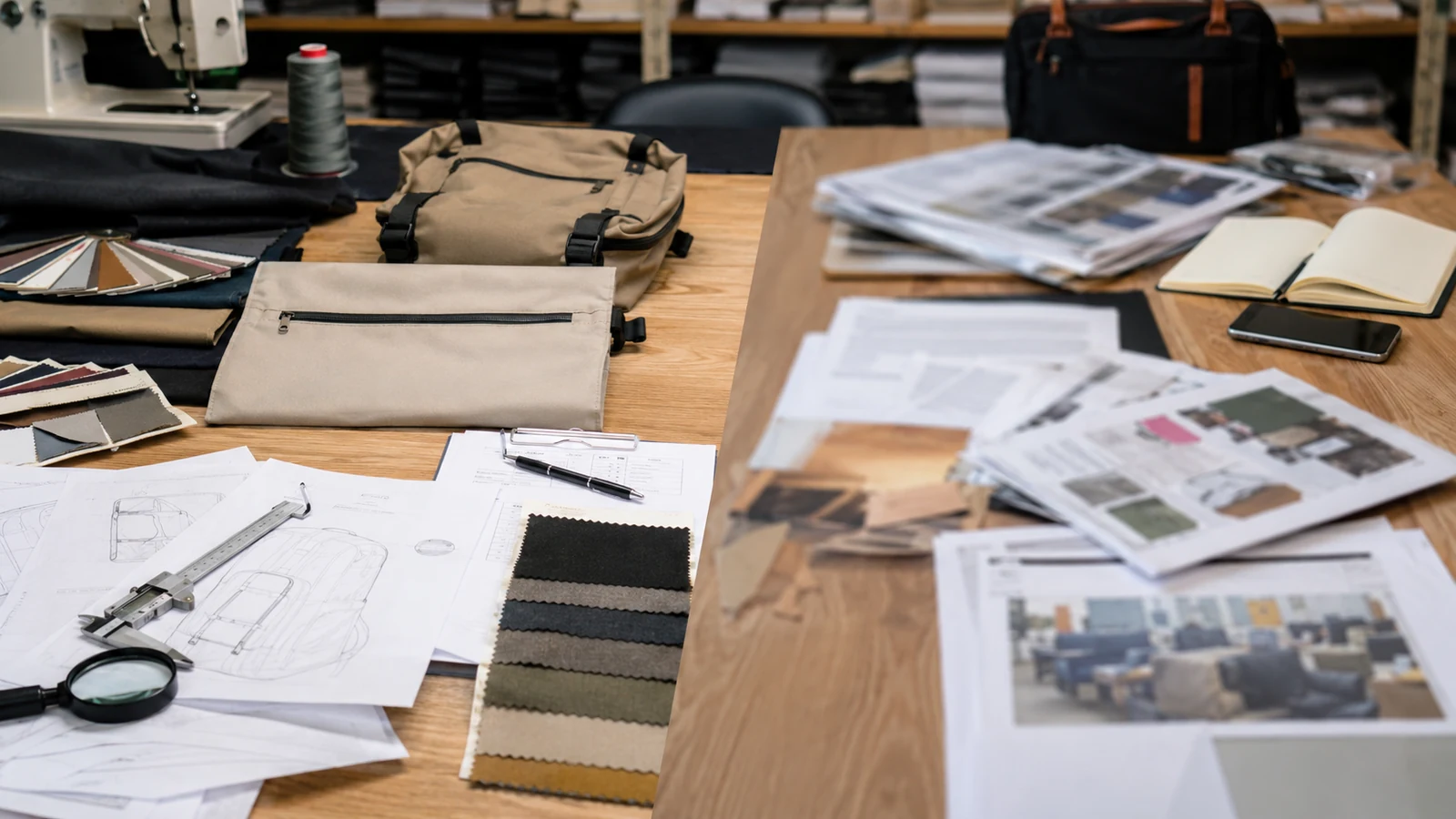

When sourcing custom bags, many brands ask whether they should work directly with a bag manufacturer or through a trading company. The answer depends on the buyer's internal resources, product complexity, required visibility, quality expectations, and need for development support. A trading company can be useful in some situations, but a manufacturer can provide more direct access to sampling, construction discussion, production planning, and QC alignment when the product is technical or brand-specific.
Connect5 Bags is positioned for B2B buyers that need OEM/ODM bag development, China sampling support, Cambodia production planning, material and trim review, quality control, and export process coordination. This guide helps sourcing teams compare the two routes without assuming one route fits every project.
Understand the role of each sourcing route
A bag manufacturer is generally responsible for sample making, material and trim coordination, production planning, workmanship control, and quality checks related to the order. A trading company may coordinate between the buyer and one or more factories, sometimes offering broader supplier access or order management. The right route depends on whether the buyer values direct technical communication, multi-factory sourcing, price comparison, or product development support.
The bag manufacturer vs trading company page is a useful reference for procurement teams building a supplier evaluation framework. Buyers can also review factory proof to understand what evidence and process visibility they should request during sourcing.
| Comparison point | Manufacturer route | Trading company route | Buyer question |
|---|---|---|---|
| Sample communication | Direct discussion with sample and production team may be available | Feedback may pass through a coordinator | Who translates sample comments into production instructions? |
| Product development | Often stronger for construction, material behavior, and QC details | May depend on factory network and coordinator experience | Who is accountable for technical decisions? |
| Supplier visibility | More direct visibility into the production route | Visibility may vary by company policy | Can the buyer see factory evidence and process records? |
| Price comparison | Quote tied to one production setup and specification | May compare options across suppliers | Are quotes based on identical specifications? |
| QC control | Can connect sample, production, and inspection standards | May coordinate QC through third parties or factory partners | Who defines and verifies the inspection checklist? |
When direct manufacturer communication matters
Direct manufacturer communication becomes important when the product has custom patterns, multiple materials, complex hardware, detailed branding, or strict packaging requirements. In these cases, small misunderstandings can affect sample rounds and production. A factory team that understands how the bag is built can respond to questions about reinforcement, zipper gauge, webbing, lining, edge finishing, logo placement, and workmanship limits.
Direct communication also helps when a buyer needs to review tradeoffs. For example, a brand may want a structured tote to stand upright, but the target material may be too soft without reinforcement. A backpack may need a curved zipper opening, but the selected zipper may not travel smoothly around corners. A cosmetic pouch may need a metal logo plate, but the panel may need backing support. These details are easier to resolve when technical feedback is connected to sample making.
Projects that benefit from manufacturer input
- Custom handbag, tote, backpack, travel, duffel, sports, cosmetic, or makeup bag programs.
- Private label ranges with shared logo trims, packaging, and color systems.
- Products with custom hardware, logo plates, special zippers, or brand-specific webbing.
- Programs that require sample revisions, material alternatives, and QC alignment.
- Orders where packaging, carton marks, and export readiness must be coordinated carefully.
When a trading company may still be useful
A trading company may be useful when the buyer needs access to many product categories, has limited local sourcing knowledge, wants market scanning, or is buying relatively simple products that require less technical development. Some trading companies also provide strong coordination, merchandising, and inspection support. The buyer should evaluate the specific company rather than rely on the label alone.
The key question is whether the trading company adds clarity or adds distance. If the trading company can explain specifications, manage samples, provide transparent production information, and coordinate QC well, it may be a workable route. If it cannot explain construction details, material differences, factory evidence, or inspection standards, the buyer may struggle during development.
The decision is not manufacturer good, trading company bad. The decision is whether the route gives the buyer enough technical clarity, accountability, and production visibility for the bag program.
How to compare quotes fairly
Quote comparison is one of the most common reasons buyers move between manufacturers and trading companies. However, two quotes are only comparable when they are based on the same specification. A small change in material weight, zipper gauge, lining, logo trim, reinforcement, packaging, or inspection expectation can change the price. Buyers should require each supplier to state assumptions clearly.
Use a structured RFQ through sourcing preparation. Include dimensions, material, lining, trim details, logo method, packaging, target quantity, sample requirements, inspection expectations, and target market. Then ask each supplier to confirm what is included, what is excluded, and which details are still open. This prevents a low-looking quote from being mistaken for a better match.
Quote comparison checklist
- Is the quote based on the same sample or tech pack?
- Are material grade, thickness, color, and supplier assumptions clear?
- Are zippers, buckles, webbing, labels, and logo trims defined?
- Is packaging included, and are carton details specified?
- Are sample costs, tooling, testing support, and export terms separated if relevant?
- Is the inspection standard connected to the approved sample?
Factory proof and process visibility
Factory proof should not be reduced to a single photo. Buyers should look for evidence that the supplier can support the product type and process required. Useful proof may include sample room communication, material and trim review, production process explanation, QC workflow, export coordination, and product examples that are relevant to the category. The goal is to confirm process capability, not to collect impressive claims.
Connect5 presents its internal process through capabilities and related factory proof references. A buyer should ask practical questions: Who reviews the tech pack? Who makes the sample? Who confirms materials? How are sample comments transferred to production? How are QC findings recorded? How are packing instructions checked before shipment?
QC responsibility must be defined early
Quality issues often happen when supplier responsibilities are unclear. If a buyer works with a manufacturer, the factory should understand the approved sample and inspection checklist. If a buyer works with a trading company, the buyer should confirm who defines QC standards, who inspects, who approves rework, and who communicates with the factory. The quality standards resource can help buyers create a shared language for defects and tolerances.
QC must be linked to sample approval, BOM, material swatches, trim approvals, packaging instructions, and carton marks. It should not appear only after production is complete. Whether using a manufacturer or trading company, the buyer should ask for a production handover file that makes inspection practical.
FAQ
Is working directly with a manufacturer always better?
No. Direct manufacturer communication can be valuable for technical development and production visibility, but the right route depends on the buyer's program, internal resources, supplier quality, and need for coordination.
How can we tell whether a supplier is a manufacturer or trading company?
Ask who owns sample making, production planning, QC, export coordination, and factory communication. Request process evidence and category-relevant production information rather than relying only on a company description.
Can a manufacturer help with materials and trims?
A manufacturer involved in development must be able to review material options, zipper and hardware direction, logo trims, packaging, and sample comments. The buyer should confirm the exact scope during the RFQ stage.
What is the main risk of comparing only unit prices?
The main risk is comparing different specifications. A lower quote may use different materials, trims, construction, reinforcement, packaging, or QC assumptions. Ask every supplier to confirm the basis of the quote.
Review your sourcing route with Connect5
Prepare your bag type, tech pack or reference images, material direction, trim notes, branding needs, quantity plan, target market, packaging requirements, and QC expectations. Share the file through Connect5 contact so the team can review whether a direct OEM/ODM manufacturing route fits your sourcing plan.