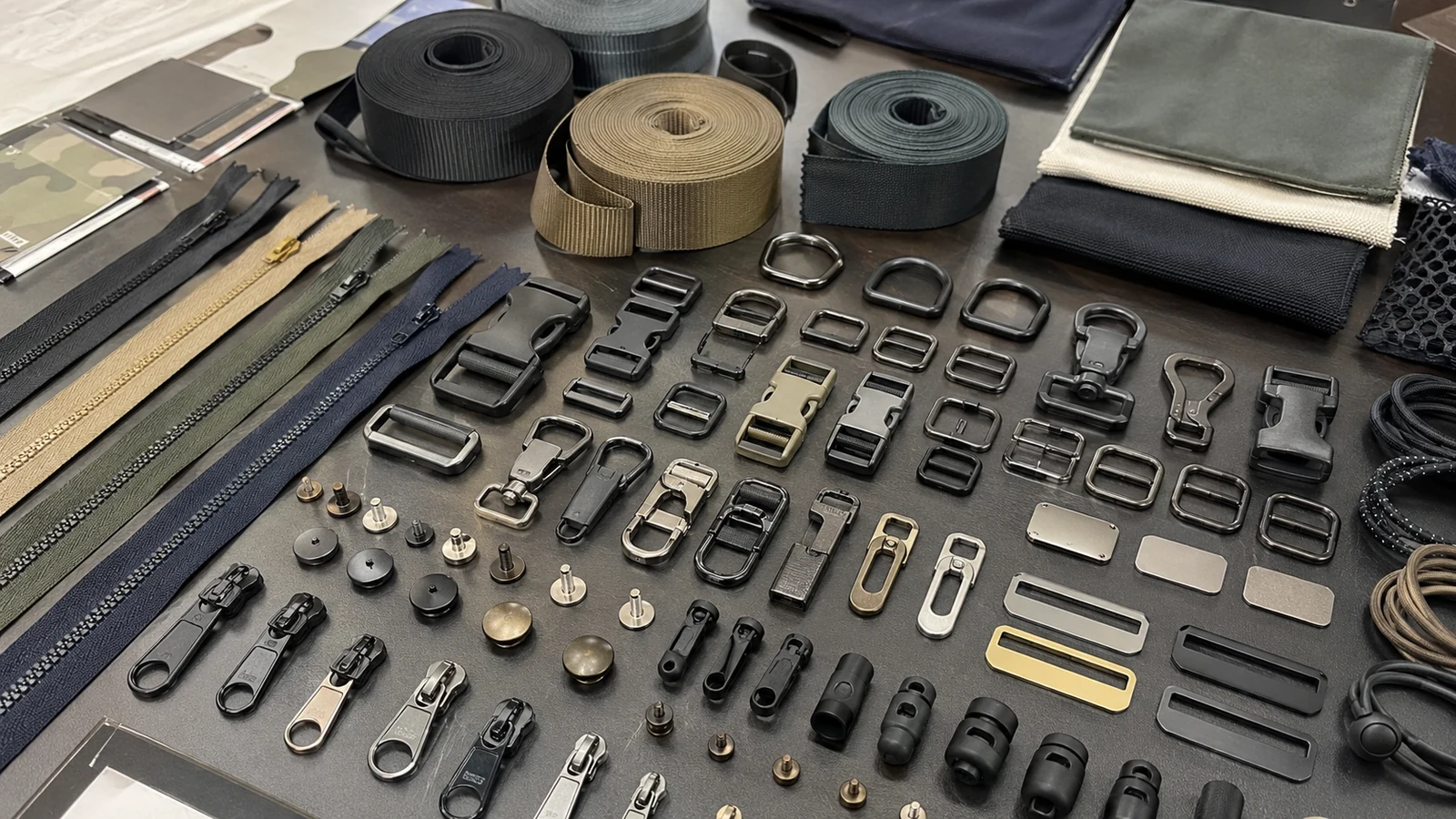
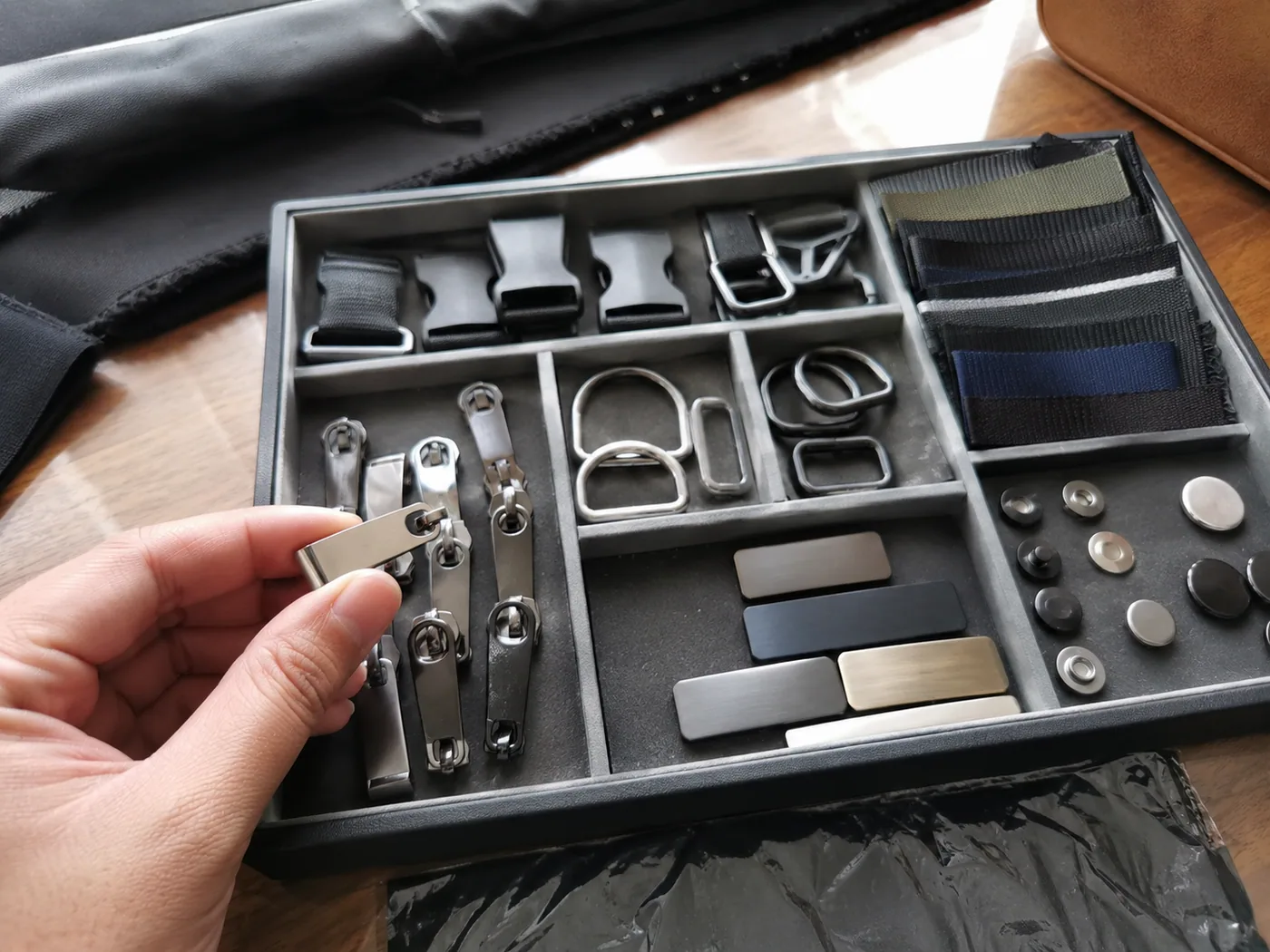
Bag hardware and trims are often small components, but they can decide whether a custom bag feels reliable, functions smoothly, and communicates the brand correctly. Zippers, buckles, adjusters, logo plates, webbing, D-rings, hooks, pullers, rivets, labels, binding, elastic, and packaging trims all affect sampling, quote accuracy, MOQ, lead time, and inspection. For B2B buyers, component specification must be treated as part of product engineering, not a final decoration step.
Connect5 Bags supports brands and sourcing teams that need China sampling support and production planning for OEM, ODM, and private label bag programs. Hardware and trim review is especially important when a buyer wants a consistent brand system across handbags, totes, backpacks, cosmetic pouches, travel bags, and sports bags.
Plan trims as a component system
A bag's components should work together. A zipper gauge should match the opening size and material weight. A buckle should match webbing width and thickness. A logo plate must be reinforced from behind. A puller must be comfortable for the intended use. A label should fit seam construction. When trims are chosen one by one without construction review, the sample may reveal avoidable issues.
Start with the bag hardware and trims resource, then connect each trim decision to the product brief and approved sample. Material choice also matters, so trim decisions must be reviewed alongside bag materials.
| Trim type | Key specification | Common issue | Sample check |
|---|---|---|---|
| Zipper | Gauge, tape color, slider, puller, opening route | Hard movement, wrong scale, zipper waviness | Open and close when bag is filled |
| Buckle or adjuster | Width, material, finish, compatibility with webbing | Slipping webbing or bulky strap ends | Adjust under normal use and check tension |
| Logo plate | Size, finish, thickness, attachment method | Panel distortion or scratching | Check placement, backing, and surface protection |
| Webbing | Width, thickness, weave, color, handfeel | Mismatch with buckle or poor strap comfort | Wear test, pull test direction, edge feel |
| Label or patch | Material, size, fold, artwork, stitch method | Crooked placement or color mismatch | Review against logo artwork and sample position |
Zippers need functional specification
Many buyers request a zipper without defining gauge, tape color, puller style, slider finish, length, or opening route. For small cosmetic pouches, a lighter zipper may be suitable. For backpacks and travel bags, zipper gauge and strength should match the opening and load. For handbags, zipper appearance, puller style, and smooth operation may be equally important. For curved openings, the zipper must move smoothly around corners without twisting.
During sampling, test the zipper when the bag is filled. A zipper can work on an empty sample but become difficult when the bag is packed. Check whether puller size works for the user, whether zipper ends are clean, whether lining interferes with the slider, and whether the zipper tape color matches the bag. If the buyer wants a custom puller, confirm artwork, size, finish, tooling needs, and attachment method early.
Zipper details to include in the RFQ
- Zipper type and gauge if known, or intended use if the factory should suggest.
- Tape color, slider finish, puller style, and any logo requirement.
- Opening route, such as straight top, U-shaped opening, curved pocket, or side access.
- Whether the zipper needs to work with padding, lining, binding, or coated fabric.
Buckles, D-rings and hooks must match the strap system
Buckles, D-rings, hooks, and adjusters must be selected with the strap system. A travel bag shoulder strap may need a stronger hook and D-ring than a lightweight crossbody. A backpack adjuster must hold webbing without slipping. A sports bag buckle may need easy operation under repeated use. The component material, finish, weight, and edge shape all affect user experience and inspection.
Buyers should confirm webbing width before choosing hardware. A 25 mm adjuster will not perform correctly with webbing that is too thin, too thick, or inconsistent. Strap ends should also be reviewed for folding, stitching, bartack placement, and edge cleanliness. For heavier bags, reinforcement patches and stitch patterns must be part of the sample comments.
Logo plates and branded trims affect MOQ and lead time
Logo plates, custom pullers, rubber patches, woven labels, embossed patches, metal tags, and branded webbing can help create a consistent private label program. They also add approval steps. Buyers should prepare artwork files, size, finish direction, placement, and target quantity. The factory team can then review whether stock trims, semi-custom trims, or custom tooling is more practical for the program.
Logo plates need special care. A plate that is too heavy can distort a thin panel. A plate with sharp edges can create handling concerns. A finish that scratches easily may require protective packing. The sample should confirm the plate's scale, position, attachment, backing reinforcement, and surface protection. For programs using multiple SKUs, the same logo trim may need to be tested on different materials.
Brand trims must be approved both as loose components and on the finished bag. A logo trim that looks correct on a table may behave differently once attached to fabric, PU, raffia, or canvas.
Webbing, binding and elastic are technical trims
Webbing is used for handles, shoulder straps, backpack straps, zipper tabs, compression straps, and decorative details. Its width, thickness, weave, color, and edge feel matter. Binding can protect edges and create a clean finish, but it must be compatible with material thickness and curves. Elastic is common in bottle pockets, brush holders, sports bags, and internal organizers, but tension and recovery must be tested.
These trims may seem broad, yet small changes can alter the product. A softer webbing may feel better on a shoulder but may twist more. A thick binding may look bulky on a cosmetic pouch. A tight elastic may make a brush organizer difficult to use. Buyers should review these details through sample comments rather than approving them only from component swatches.
Sample approval and QC for trims
The sample development process should include a trim approval record. This can include component photos, color references, finish notes, artwork files, and approved sample placement. During production, QC teams should compare trims against the approved reference. The quality standards guide can help buyers define visible defects and functional checks.
Trim-related inspection should cover zipper function, slider direction, puller attachment, buckle operation, webbing slippage, stitching at strap anchors, logo plate scratches, rivet pressure, label placement, color matching, binding cleanliness, elastic tension, and packing protection. If trims are custom, inspection should also check whether the correct version was used across all colors and SKUs.
FAQ
Do custom bag trims always require tooling?
No. Some branding can be done with woven labels, printed labels, patches, embroidery, or existing trim shapes. Metal logo plates and custom pullers may require tooling or mold review depending on the design.
When should trims be approved?
Key trims must be reviewed before final sample approval. For custom trims, approve the component and then approve the finished bag sample using that trim.
Can one trim set be used across several bag types?
Yes, a shared trim system can support brand consistency. Each bag type should still test the trim on its own material and construction because attachment and scale may differ.
Why do zipper choices affect quote accuracy?
Zipper gauge, slider finish, puller style, tape color, length, and custom branding all affect component cost and sourcing. A quote based on an undefined zipper is not fully comparable.
Prepare trim details for Connect5
Before contacting the team, prepare your bag type, material direction, zipper notes, buckle and webbing needs, logo artwork, trim finish preferences, target quantity, packaging requirements, and inspection concerns. Share the brief through Connect5 contact so the team can review hardware options, sample requirements, QC points, and production readiness.