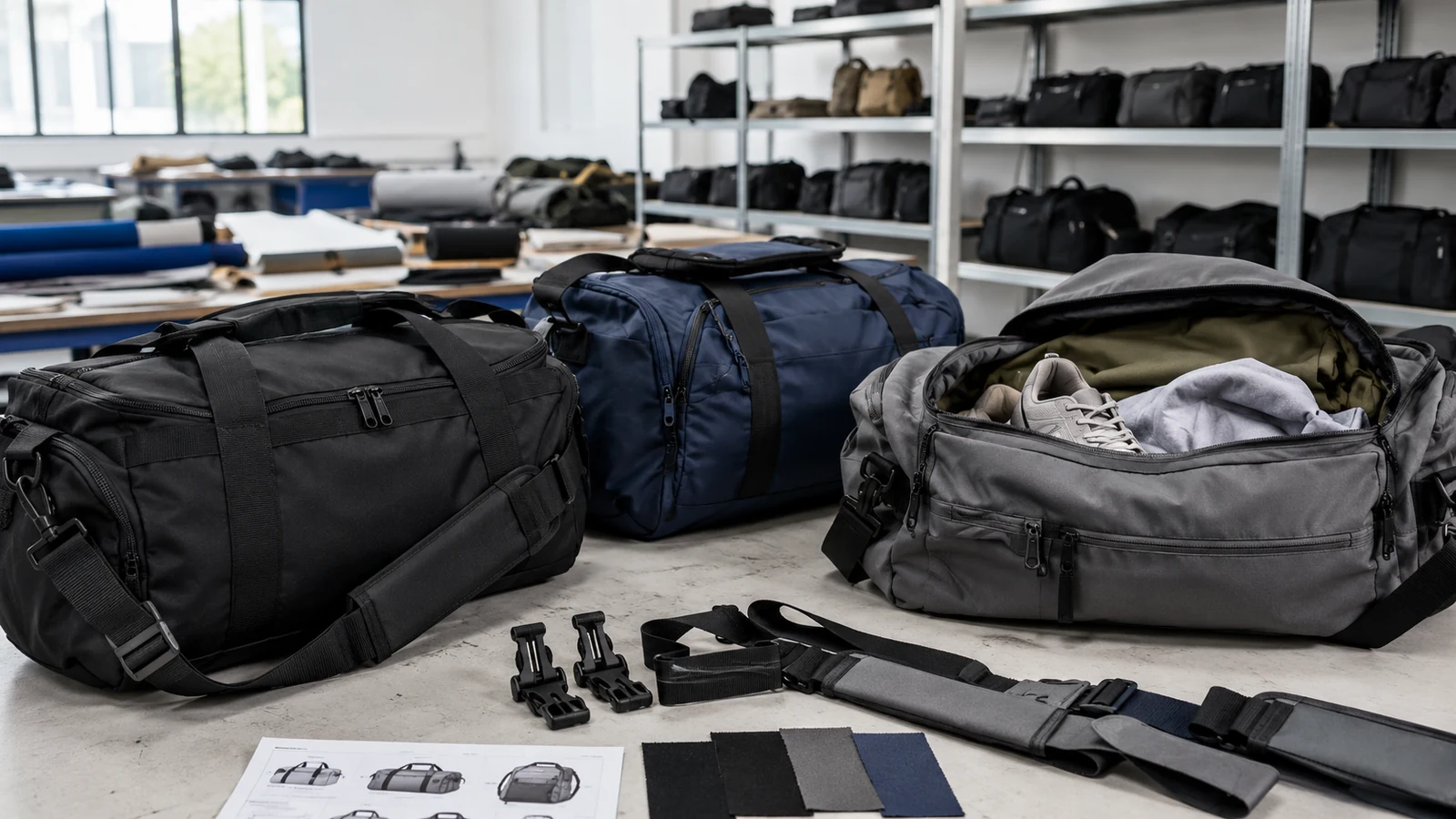
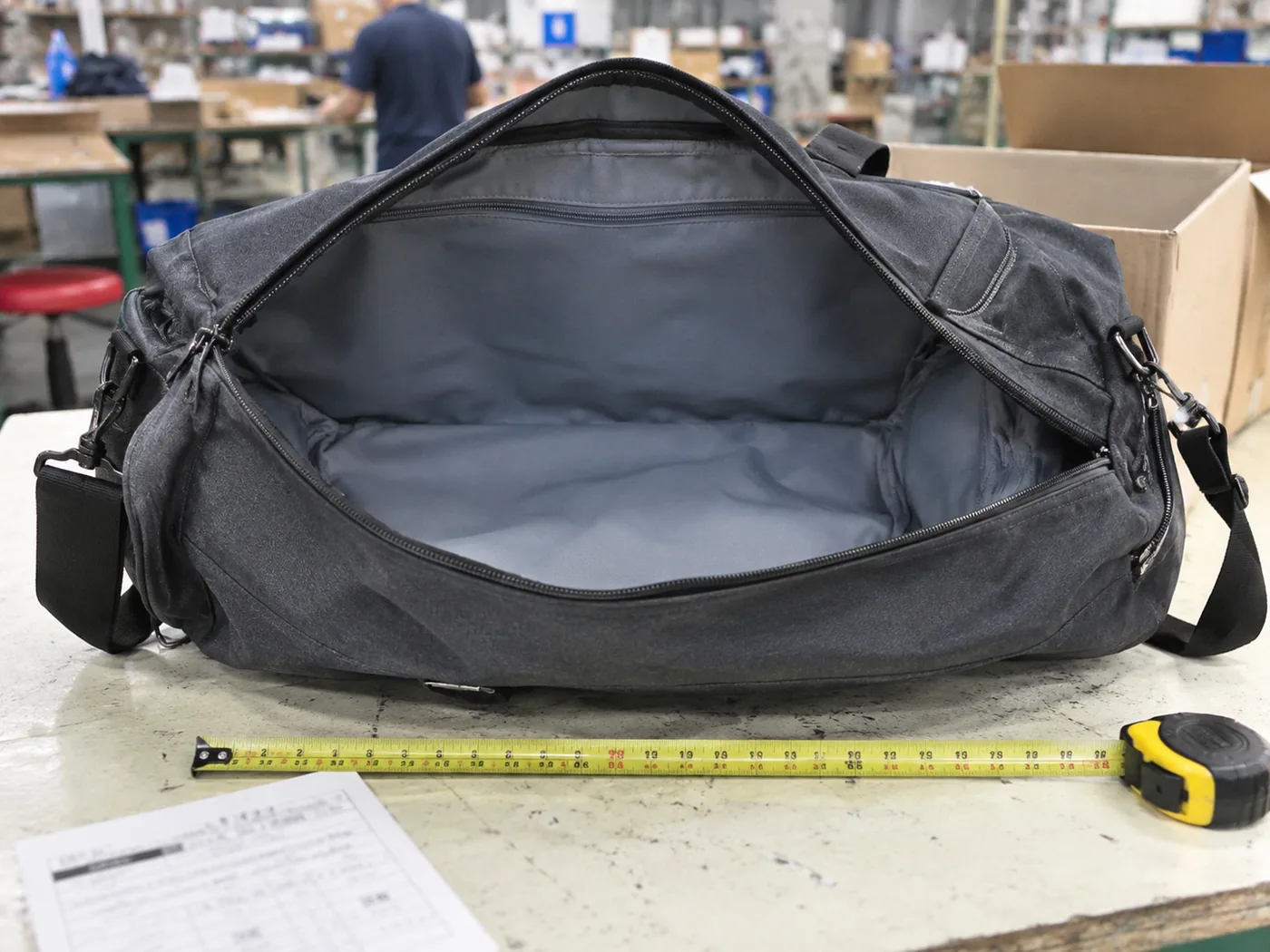
Travel bags, duffel bags, and sports bags require a sourcing approach that focuses on load, function, access, and durability. These products are handled heavily, filled unevenly, carried by different straps, and exposed to travel, gym, team, or outdoor environments. A simple exterior photo is not enough for a manufacturer to understand the construction. B2B buyers should define the use case, carrying weight, compartment plan, materials, trims, branding, packaging, and inspection requirements before asking for a production quote.
Connect5 Bags supports overseas brands and sourcing teams that need practical development for travel and sports categories. China sampling support helps review materials, zippers, webbing, handles, reinforcement, and sample comments before Cambodia production planning. This structure is useful when the buyer wants to reduce assumptions before bulk materials and trims are prepared.
Separate travel, duffel and sports bag requirements
The terms travel bag, duffel bag, and sports bag are sometimes used interchangeably, but each program has different priorities. A travel bag may need packing capacity, trolley compatibility, secure compartments, and clean styling. A duffel bag may focus on volume, shoulder strap comfort, handle strength, and opening access. A sports bag may need shoe compartment, wet/dry separation, ventilation, abrasion resistance, or team branding.
Buyers can review travel bag manufacturer, duffel bag manufacturer, and sports bag manufacturer pages to decide which category language fits the RFQ. Clear language helps the factory team match construction details to the product's real use.
| Bag category | Primary use | Construction focus | QC priority |
|---|---|---|---|
| Travel bag | Weekend trips, business travel, carry-on organization | Capacity, access, trolley sleeve, internal organization | Measurement, zipper function, packing stability |
| Duffel bag | Flexible packing, gym, overnight, team use | Volume, handle wrap, shoulder strap, bottom reinforcement | Load points, seam strength, strap attachment |
| Sports bag | Training, team programs, equipment, wet/dry items | Ventilation, shoe pocket, coated fabric, mesh, compartments | Material durability, pocket function, odor and packing check |
| Hybrid bag | Travel plus gym or work use | Convertible straps, organized compartments, balanced appearance | Function sequence, strap adjustment, zipper routes |
Build the RFQ around load and access
For travel and sports categories, load points must be defined early. The manufacturer needs to know how the bag will be carried, what it will hold, and which openings will be used most often. A bag with a heavy shoulder strap needs stronger D-rings, webbing anchors, and reinforcement patches. A duffel with a wide U-shaped zipper opening needs smooth zipper travel and corner construction. A sports bag with shoe compartment needs separation, ventilation, and lining review.
RFQ details to provide
- Dimensions, volume target, and intended carrying weight.
- Main opening style, side pockets, shoe compartment, laptop section, wet pocket, or mesh pockets.
- Carry options, including top handles, shoulder strap, backpack straps, trolley sleeve, or grab handles.
- Material direction, lining, bottom panel, reinforcement, and water-resistance expectations in ordinary use.
- Hardware details, including zipper gauge, buckles, adjusters, D-rings, hooks, and strap pads.
- Branding, packaging, target quantity, target market, and inspection concerns.
A detailed RFQ does not require every component code at the first contact. It should provide enough context for the factory team to ask relevant technical questions and suggest sampling priorities.
Materials must be selected for the intended environment
Nylon and polyester are common in travel and sports bags because they can support different weights, coatings, textures, and colors. Denier, backing, lamination, and lining all influence feel and durability. Canvas can create a lifestyle or heritage appearance, but weight, shrinkage, and dirt resistance must be reviewed. PU or leather-like panels can add structure or brand style, but high-friction areas require checking. Mesh can add ventilation, while coated fabrics can improve cleanability for gym and sports use.
Buyers should use bag materials as a starting reference, then review swatches and full samples. A material that looks strong in a small swatch may behave differently when used on a large duffel panel. The sample must be filled and carried to check sagging, handle pressure, zipper stress, and bottom shape.
Material checks for heavy-use bags
- Panel stiffness and whether the bag holds its intended shape.
- Bottom abrasion direction and reinforcement method.
- Color fastness and staining risk for light colors or contrast trims.
- Coating behavior around seams, folded edges, and zipper areas.
- Compatibility between shell material, lining, padding, binding, and webbing.
Zippers, webbing and buckles are not minor details
Travel and sports bags often fail first at the components that carry stress: zippers, handle anchors, shoulder strap hooks, webbing loops, buckles, and bottom seams. These details must be specified and tested during sampling. A zipper must be suitable for the opening length and curve. Webbing should match adjuster width and carry load. Buckles and hooks should not feel weak compared with the intended contents. Strap pads should sit in the correct position when the bag is worn.
Custom trims may improve brand identity, but they also add sourcing and approval steps. Stock trims may be more practical for first development when the buyer is still validating product-market fit. The choice must be discussed with the factory team based on target order size, timeline, and brand goals.
Sampling and QC should include load-point review
The sample must be tested with realistic contents. Fill the bag, carry it by each handle, use the shoulder strap, open and close every zipper, adjust webbing, check shoe compartment access, and review how the bag stands or collapses. The approved sample should identify reinforcement points and any special workmanship instructions. Buyers can use quality standards to prepare an inspection checklist for functional and visual checks.
QC should cover dimensions, seam strength, stitch quality, webbing attachment, strap adjustment, zipper function, buckle function, lining fit, pocket placement, logo position, stains, odor, thread trimming, packing shape, carton marks, and export packing. A travel bag that passes visual inspection but fails under load has not met the program's real purpose.
For travel, duffel and sports bags, the approved sample must be reviewed with weight, movement, opening access, and packing in mind.
Quote comparison should include construction depth
Unit price comparisons can be misleading when suppliers are not quoting the same construction. A cheaper-looking duffel may use thinner fabric, weaker webbing, fewer reinforcement patches, smaller zipper gauge, lighter hardware, or simpler lining. A more detailed quote should specify material, lining, zipper, buckles, webbing, padding, logo method, packaging, and inspection assumptions. Buyers should ask what is included and which items are open for revision.
MOQ and lead time depend on material sourcing, custom trims, color count, packaging components, and production schedule. The buyer should share target quantity by SKU and color, then ask the team to identify MOQ drivers. This turns the quote discussion into a practical development review rather than a price-only negotiation.
FAQ
What makes duffel bags different from regular tote bags?
Duffel bags usually carry more weight, use longer zippers, include shoulder straps, and require stronger load-point reinforcement. The sample must be tested filled and carried.
Can one factory develop travel bags and sports bags in the same program?
Yes, but each SKU should have its own construction review, material confirmation, sample approval, and QC checklist. Shared trims and materials can be considered when suitable.
Do sports bags need ventilation?
Ventilation depends on the intended use. Shoe compartments, wet pockets, and training bags may need mesh or ventilation details. The buyer should define use case and cleaning expectations in the RFQ.
What must be prepared before contacting a travel bag manufacturer?
Prepare dimensions, volume target, load expectations, compartment plan, material direction, component notes, logo files, packaging needs, estimated quantity, target market, and inspection concerns.
Review your travel or sports bag project with Connect5
Share your product brief, reference images, load expectations, materials, trims, logo files, packaging requirements, order plan, and target market through Connect5 contact. The team can review the sampling route, component decisions, QC points, and export-ready production planning for your travel, duffel, or sports bag program.