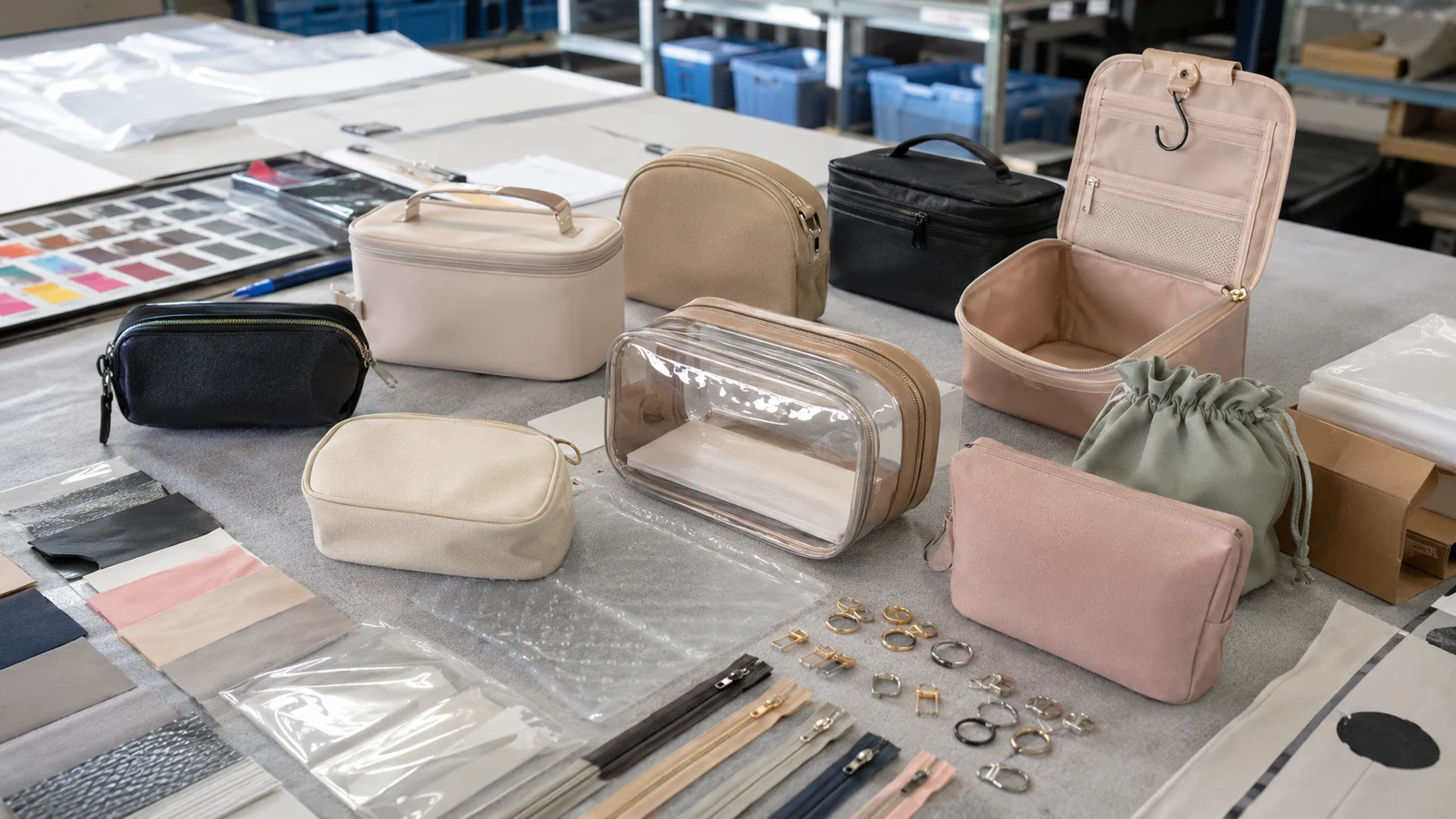
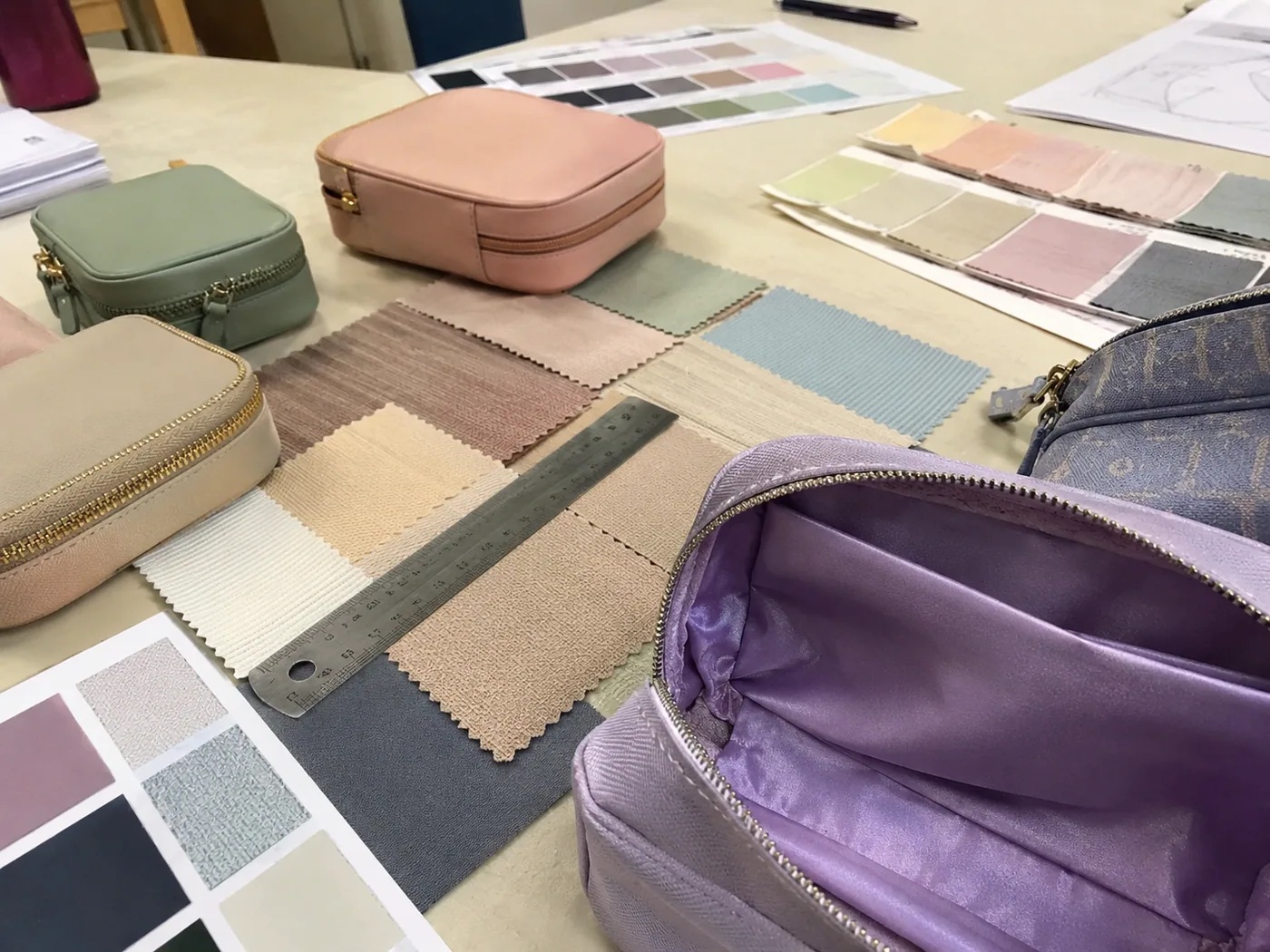
A makeup bag manufacturer supports more than small pouch sewing. Beauty brands, retailers, gift program teams, and private label buyers need cosmetic bags that match product positioning, protect contents, fit packaging requirements, and meet practical quality expectations. A cosmetic pouch may be used as a retail accessory, a promotional kit, a travel organizer, a gift-with-purchase item, or a reusable packaging component for a beauty set. Each use case changes the sourcing brief.
Connect5 Bags helps B2B buyers plan makeup bag and cosmetic bag development through China sampling support and production planning. The work includes material review, zipper and puller decisions, lining, logo method, packaging, inspection points, and export readiness. The buyer should approach the RFQ with a clear description of how the cosmetic bag will be filled, sold, packed, and used.
Define the cosmetic bag use case
Cosmetic bags range from flat zipper pouches to boxy wash bags, transparent travel pouches, brush organizers, train cases, drawstring makeup bags, and multi-compartment sets. The construction should match the contents and the sales channel. A pouch used inside a gift box may prioritize logo placement and color matching. A travel wash bag may need a wipeable lining, stronger zipper, and more structure. A brush bag may need elastic holders, flap protection, and internal organization.
Buyers can review makeup bag manufacturer and cosmetic bags to frame the category before preparing a quote request. Clear category definition helps the factory team avoid overbuilding a simple pouch or underbuilding a functional organizer.
| Cosmetic bag type | Typical buyer goal | Construction focus | Sample review priority |
|---|---|---|---|
| Flat zipper pouch | Promotional kit, simple retail accessory, packaging component | Fabric, zipper, print, label, seam finish | Print placement, zipper smoothness, size tolerance |
| Boxy makeup bag | Retail product, beauty set, travel organizer | Shape, lining, gusset, zipper opening, handle | Capacity, corner sewing, shape stability |
| Brush organizer | Beauty tool storage, professional set, travel use | Elastic, sleeves, flap, lining, closure | Brush fit, elastic tension, protection |
| Transparent pouch | Travel, display, kit packing, easy content view | PVC or TPU direction, binding, zipper, label | Clarity, seams, folding marks, odor check |
Materials should match product use and brand position
Cosmetic bags often need materials that balance appearance, cleanability, and structure. PU can offer a polished surface and many color options, but the buyer should check crease marks, lining attachment, and logo compatibility. Nylon and polyester can work for lightweight or travel-focused pouches, with attention to coating, print method, and zipper pairing. Canvas can suit natural or casual brand directions, though staining and shrinkage must be considered. Transparent materials can be useful for travel or display, but clarity, odor, fold marks, and edge finishing require review.
The bag materials resource can help the buyer prepare material questions. For cosmetic applications, the interior material is also important. A wipeable lining may be useful for makeup residue, while a soft lining may be selected for premium appearance. The buyer should define whether the pouch must be easy to clean, structured, soft, foldable, transparent, water-resistant in ordinary use, or compatible with printed artwork.
Material questions for cosmetic bag RFQs
- Will the bag hold dry cosmetics, liquid products, brushes, skincare bottles, or mixed items?
- Does the lining need to be wipeable, printed, quilted, transparent, or color matched?
- Should the bag stand on its own, fold flat, or fit inside a gift box?
- Will the exterior carry print, embroidery, embossed logo, woven label, or metal logo plate?
- Are there target market requirements that affect labeling, packaging, or material review?
Zippers, pullers and trims can define usability
Small bags depend heavily on zipper function. A zipper that feels acceptable on a large tote may feel bulky on a slim pouch. A small puller may look refined but be difficult to use with cosmetics residue or wet hands. A boxy bag may need a zipper that travels around corners smoothly. A brush organizer may use elastic, snaps, hook-and-loop closure, or a tie closure instead of a standard zipper. These choices must be reviewed in the sample, not only in a component list.
Buyers planning custom pullers, metal plates, rubber labels, woven labels, or printed tabs should review bag hardware and trims. Cosmetic bag trims are small, so logo scale and attachment method matter. A logo plate that works on a tote may be too heavy or visually large on a cosmetic pouch. A woven label may need a specific fold and stitch position to look clean on a small seam.
Trim details to specify
- Zipper gauge, tape color, slider finish, and puller size.
- Binding, piping, or edge finishing color.
- Logo label size, fold type, and placement.
- Elastic width and tension for brush holders.
- Handle, wristlet, loop, or small webbing tab requirements.
Sampling should include filling and packing tests
The sample development process for cosmetic bags should include real-use checks. Place typical products inside the sample, test the zipper with the bag filled, check whether brushes fit, confirm whether bottles stand upright, and review how the pouch looks when packed in a gift box or polybag. A cosmetic pouch can appear correct when empty but lose shape when filled.
Sample comments must be measurable. For example, increase gusset by 10 mm, change zipper puller to a wider style, move logo label 15 mm from side seam, add lining reinforcement at zipper ends, adjust brush elastic spacing, or reduce corner bulk. These comments help the sample room produce a revised version that can be compared clearly to the previous sample.
For beauty programs, cosmetic bag samples must be reviewed with the actual product kit whenever possible. This checks capacity, presentation, and packing at the same time.
Packaging and QC for beauty-related programs
Cosmetic bag packaging often depends on how the item is sold. A retail pouch may need hangtag, barcode label, dust bag, insert card, or shelf-ready packing. A gift-with-purchase pouch may need to fit a carton with skincare products. An e-commerce item may need shape protection and clean polybag packing. The buyer should share packaging expectations early because packing size, inserts, labels, and carton quantity can affect quote and production planning.
Quality checks should cover dimensions, zipper function, seam quality, lining fit, logo position, print clarity, stains, odor, loose threads, corner shape, trim attachment, packing condition, barcode or label placement if applicable, and carton marks. The quality standards reference can help buyers create a checklist that fits cosmetic bag use rather than relying on a broad bag inspection sheet.
MOQ, quote and production planning
MOQ for makeup bags can be influenced by material, color, zipper tape, label production, printing, packaging, and the number of SKUs. A simple pouch using stock materials may have different MOQ considerations than a multi-compartment beauty organizer with custom lining and logo trims. Buyers should share target quantities by color and ask the factory team which details affect MOQ, sample timing, and quote stability.
A production handover should include approved sample, BOM, material swatches, zipper and trim approvals, artwork, logo placement, packaging instructions, carton details, inspection checklist, and export documentation notes. This handover is especially important when the cosmetic bag is part of a larger beauty set with strict launch timing.
FAQ
Can a makeup bag manufacturer develop a pouch for a beauty kit?
Yes. Share the product dimensions, fill list, gift box or packing method, logo files, and target quantity. The sample must be tested with the actual products or realistic substitutes before approval.
What is the difference between a makeup bag and a cosmetic bag?
The terms often overlap. A makeup bag may refer to a pouch for daily beauty items, while cosmetic bag can include travel organizers, brush cases, transparent pouches, wash bags, and beauty kit packaging.
Which logo methods work for cosmetic pouches?
Common methods include printed logo, woven label, rubber label, heat transfer, embroidery, embossing, or small metal plate. The suitable method depends on material, size, budget direction, and desired appearance.
How can buyers reduce sampling delays?
Provide product dimensions, material direction, logo artwork, packaging requirements, target quantity, and consolidated sample comments. Avoid changing material and logo method after the sample direction has been approved unless the schedule can be reviewed.
Share your cosmetic bag brief
Prepare your pouch type, dimensions, materials, lining, zipper direction, logo files, packaging plan, target quantity, target market, and product fill information. Send the brief through Connect5 contact so the team can review sample requirements, trim choices, QC points, and production readiness.