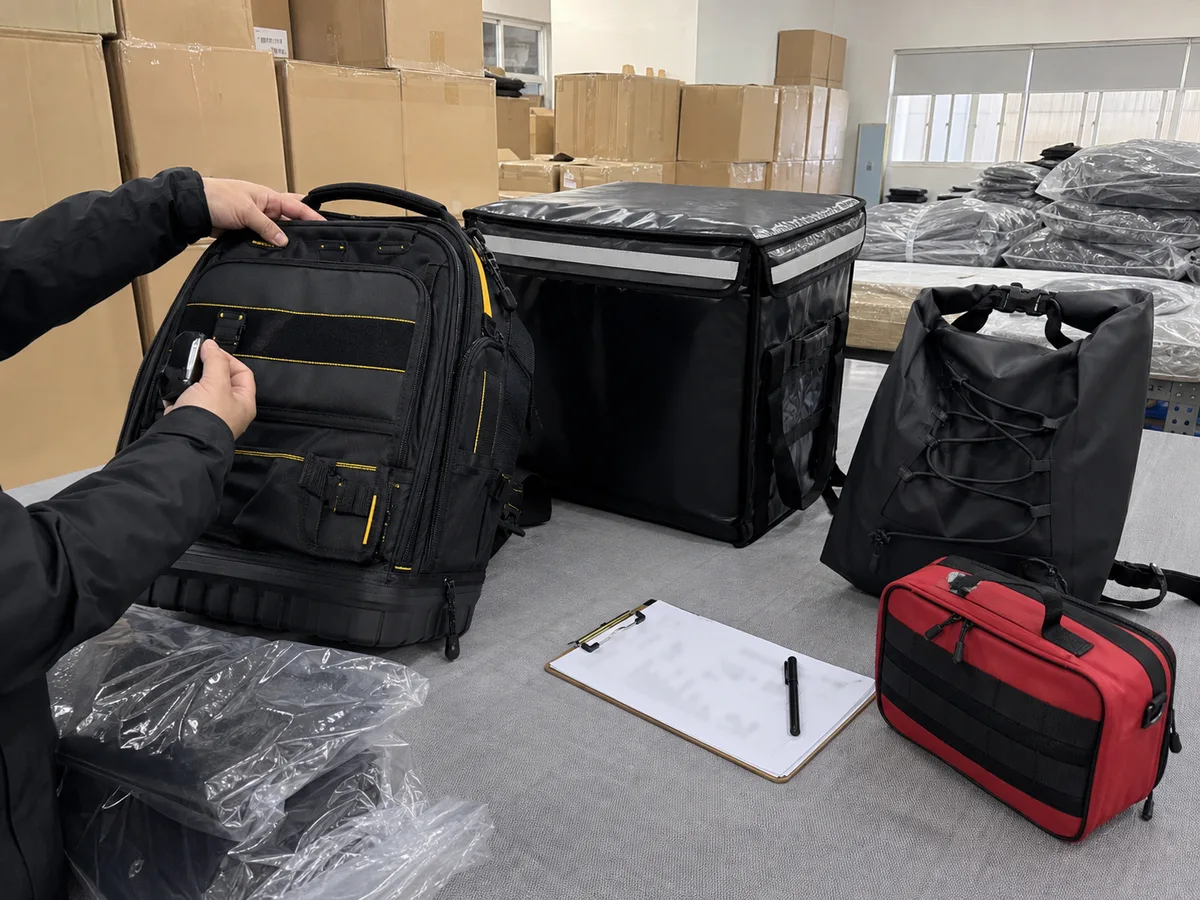
Functional bag manufacturing route

Tool bag manufacturer for custom electrician, HVAC, and field-service programs

Build durable tool backpacks, hard-bottom tool bags, open-top tool totes, heavy-duty tool organizers, and technician bags around trade use, load weight, pocket logic, and private-label sourcing requirements.

Short answer for sourcing teams

Is this the right manufacturing route?

Custom tool bag manufacturing is a fit when buyers need Durable field kits with vertical tool access, reinforced bottoms, branded patches, and trade-specific pocket maps. Bulk-ready tool organizers that tolerate abrasion, heavy loads, vehicle storage, and repeated jobsite handling. The first quote should confirm format, materials, reinforcement, sample timing, QC scope, packing, MOQ, and destination.

Open functional bag hub
Electrical and HVAC supply channels

Best-fit buyer programs

electrical distributors, HVAC suppliers, contractor supply companies

Durable field kits with vertical tool access, reinforced bottoms, branded patches, and trade-specific pocket maps.

MRO and industrial distributors

Best-fit buyer programs

MRO distributors, industrial supply companies, safety equipment distributors

Bulk-ready tool organizers that tolerate abrasion, heavy loads, vehicle storage, and repeated jobsite handling.

Tool and workwear brands

Best-fit buyer programs

tool brands, workwear brands, Amazon tool accessory sellers

Private-label development support for fabric, structure, trim, logo placement, colorways, retail packing, and sample revisions.

Best-fit buyer programs

Who this route is for

Electrical and HVAC supply channels

electrical distributors, HVAC suppliers, contractor supply companies

Durable field kits with vertical tool access, reinforced bottoms, branded patches, and trade-specific pocket maps.

electrician tool backpack private label HVAC tool bag wholesale supplier contractor tool bag custom logo

MRO and industrial distributors

MRO distributors, industrial supply companies, safety equipment distributors

Bulk-ready tool organizers that tolerate abrasion, heavy loads, vehicle storage, and repeated jobsite handling.

industrial tool bag OEM factory heavy duty tool bag manufacturer MRO supplier tool bag

Tool and workwear brands

tool brands, workwear brands, Amazon tool accessory sellers

Private-label development support for fabric, structure, trim, logo placement, colorways, retail packing, and sample revisions.

custom tool backpack manufacturer tool bag private label hard bottom tool bag manufacturer

Specification route

Turn the sourcing brief into a factory-ready RFQ

These manufacturing routes should not behave like retail category pages. Their job is to help a sourcing team move from product idea to quote-ready specification.

Load-bearing shell

Start with the carry weight and jobsite use before choosing fabric and reinforcement.

  • 1680D or 900D polyester
  • ballistic nylon options
  • PE or PP board reinforcement
  • rubber molded bottom
  • abrasion-resistant panels

Tool organization

Pocket logic is the product. Buyers need organized access more than a fashion silhouette.

  • open-top tool tote layout
  • vertical screwdriver pockets
  • drill and meter zones
  • tape loop and hook points
  • quick-access front pockets

Factory details

Trade buyers look for proof that the construction survives daily field work.

  • bar tack stitching
  • double stitching
  • reinforced handles
  • padded shoulder straps
  • reflective safety strip

Private-label finish

The page should convert sourcing teams by showing what can be customized.

  • woven label or rubber patch
  • custom color blocking
  • SBS or YKK zipper options
  • hangtag and barcode packing
  • carton marks for distributors

Common failure points

What should be clarified before sampling?

These are the practical issues that usually create sample revisions, cost changes, or bulk-production risk if they are not addressed in the first RFQ.

01

Tool list arrives after sampling

Pocket layout often needs rework when screwdriver, meter, drill, bit, tape, and accessory dimensions are not confirmed before the first sample.

02

Loaded weight is underestimated

Handle attachment, shoulder strap stress points, webbing width, bar tack placement, and bottom support should be planned around the real loaded weight.

03

Bottom structure is chosen too late

Soft, PE board, PP board, and rubber molded bottoms change standing stability, abrasion resistance, carton volume, and sample cost.

04

Pocket depth does not match real tools

A generic pocket map can fail when tools sit too deep, tip outward, block zipper paths, or make the bag unbalanced.

05

Logo and carton details are added after approval

Patch size, barcode, hangtag, polybag, carton mark, and distributor pack-out should be approved before bulk release.

Factory workflow

Sampling, production, QC, and export packing path

01

Trade-use brief

Map the user, loaded weight, tool types, pocket count, base structure, logo method, and target retail channel.

02

Material and base review

Confirm shell fabric, lining, board reinforcement, molded bottom, webbing, zipper, puller, and safety details.

03

Sample and pocket testing

Build the first sample around actual tool placement so the buyer can check access, balance, and loaded comfort.

04

Bulk production and QC

Run line checks for seam strength, pocket placement, handle attachment, zipper movement, label position, and carton packing.

Quote readiness

Information buyers should send before sampling

A focused RFQ reduces sample revisions and keeps the discussion around manufacturing feasibility, MOQ, and cost drivers.

Send tool bag RFQ Download tool bag RFQ checklist

Copy this checklist into your RFQ email before sending tool lists, pocket maps, loaded weight targets, and bottom-structure requirements.

01 Target trade: electrician, HVAC, mechanic, telecom, field service, contractor, or MRO
02 Bag format: backpack, open-top tote, rolling bag, hard-bottom bag, pouch, or organizer
03 Loaded weight target and tool list
04 Fabric and reinforcement preference
05 Logo method, colorway, trim, zipper, and retail packaging
06 MOQ target, sample deadline, and destination market

Factory proof

Show production control instead of generic product claims

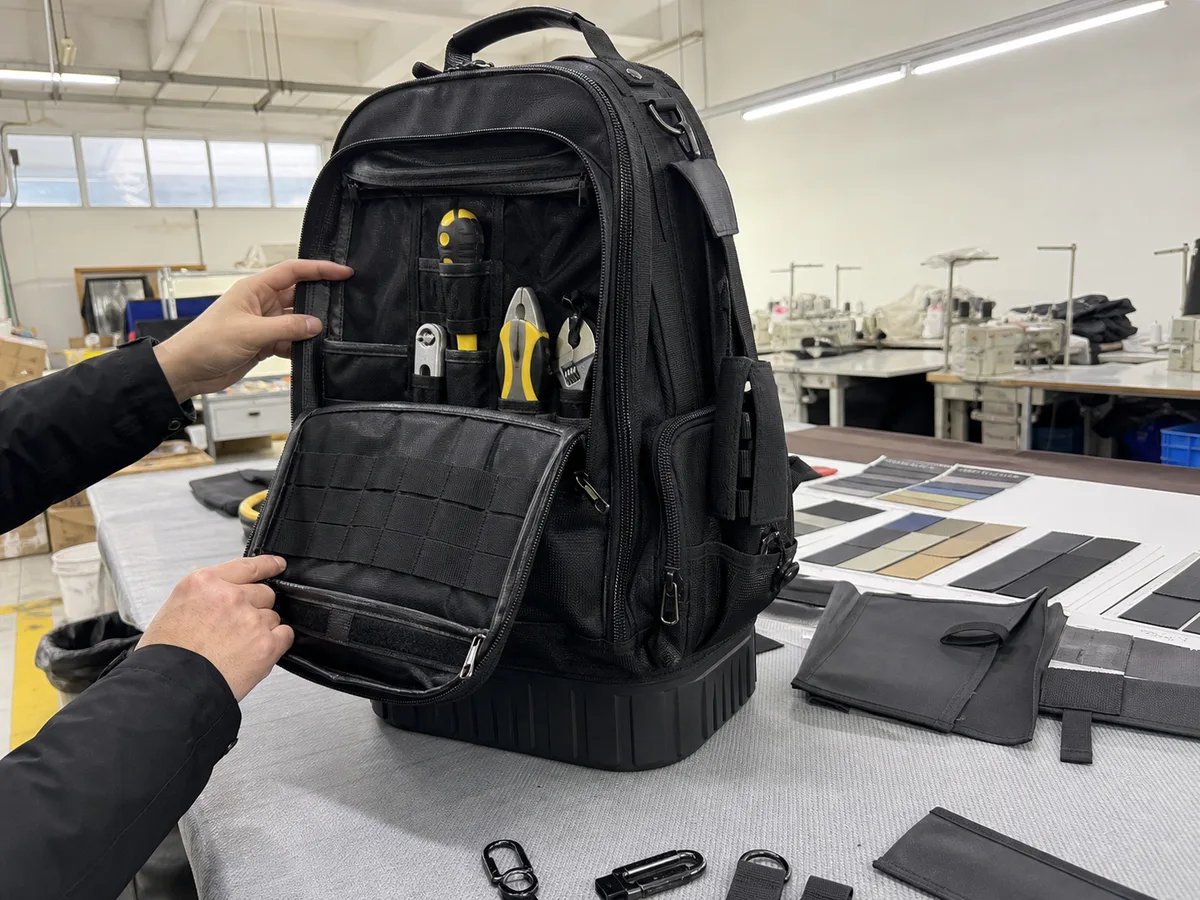
Phone photo of reinforced custom tool backpack materials and pocket layout review

Material control

Fabric, trim, and reinforcement checks

Confirm fabric denier, lining, webbing, zipper, board reinforcement, and bottom construction before sampling.

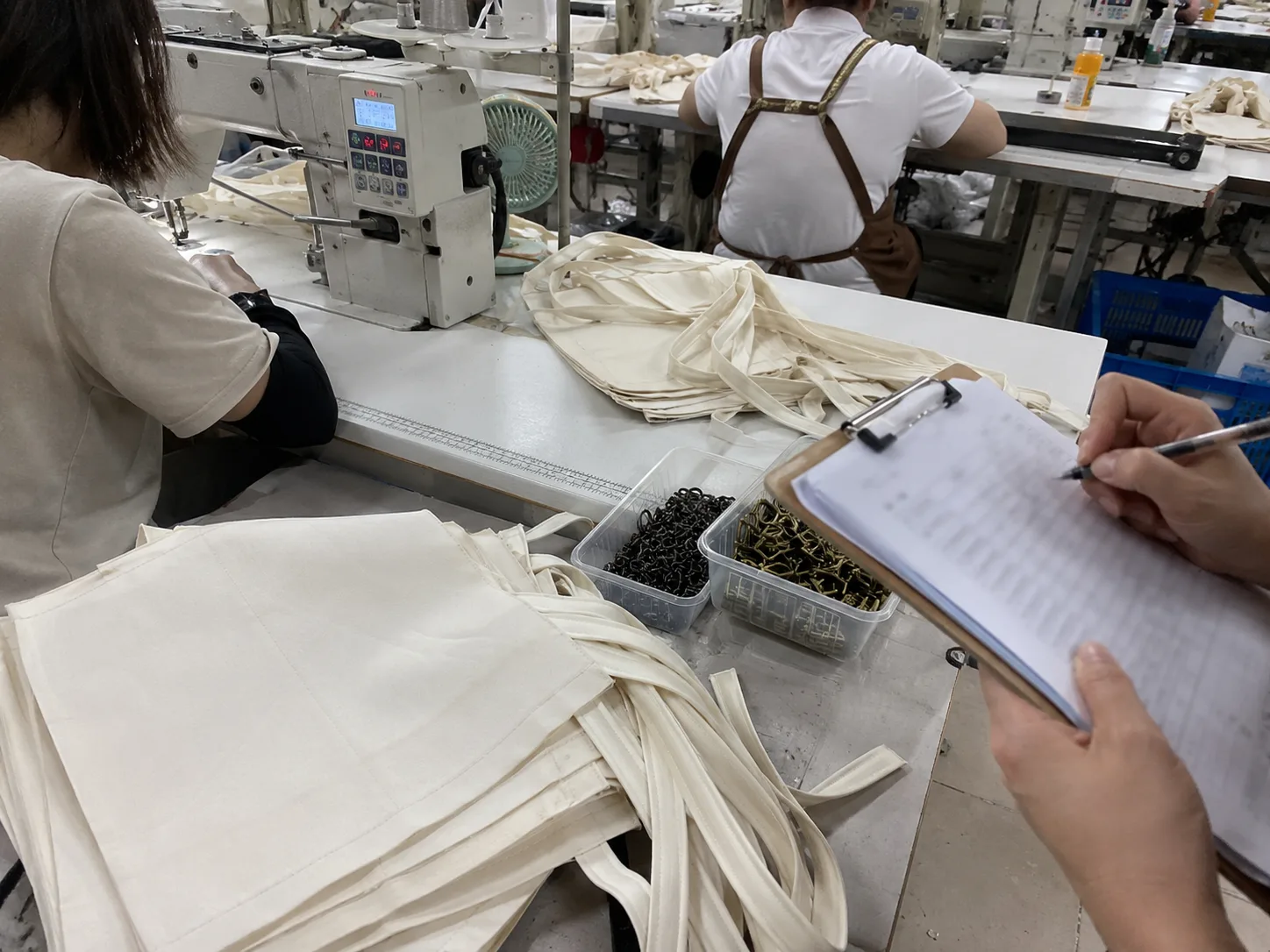
Sewing line control for reinforced custom tool bag production

Line control

Reinforced sewing and pocket placement

Tool pockets, handles, straps, and load-bearing seams need line-level inspection because small placement errors affect daily use.

Phone photo of final QC and packing release for functional bag bulk orders

QC release

Final inspection before export packing

Check zipper movement, stitch strength, logo position, carton labeling, and packed quantity before shipment release.

Proof pack evidence

Five proof areas for this route

Buyers should ask for proof that matches the construction risk of this bag type. The request can be shared as redacted photos, sample notes, QC checkpoints, and packing records during RFQ.

Material proof

1680D / 900D shell, webbing, zipper, and board reinforcement

Buyers can request fabric swatch photos, trim options, zipper puller notes, PE or PP board direction, and rubber-bottom reference before the first tool bag sample.

Structure proof

Pocket map, hard bottom, handle stress points, and bar tack plan

The route should show how tool pockets, shoulder straps, bottom structure, handle attachment, and stress-point stitching are reviewed against the real tool list.

QC proof

Loaded-weight, pocket placement, zipper, and handle checks

Tool bag QC should document pocket placement, loaded balance, zipper movement, handle pull areas, strap alignment, and carton count before release.

Packing proof

Polybag, hangtag, barcode, carton mark, and export carton plan

Distributor programs can request packed dimensions, carton labeling, hangtag and barcode placement, and export carton grouping before bulk shipment.

Redacted program example

HVAC tool backpack, 2,000-5,000 pcs, North America

Example scope: 1680D shell, molded rubber bottom, reinforced shoulder straps, vertical pocket map, QC focus on strap strength, zipper movement, pocket placement, and carton count.

Proof boundary

Public pages do not rely on undisclosed customer names, private audits, or unsupported certification claims. Detailed proof is shared with qualified buyers in the RFQ path.

Related specification guides

Use support guides to clarify the RFQ before sampling

FAQ

Buyer questions before RFQ

Can Connect5 manufacture custom tool bags for electricians or HVAC technicians?

Yes. Connect5 can develop custom tool backpacks, electrician tool bags, HVAC tool bags, hard-bottom tool bags, and open-top tool totes based on the buyer brief, sample target, material choice, logo method, MOQ, and export market.

What details are needed for a tool bag RFQ?

A useful RFQ should include the trade use, bag format, loaded weight target, pocket layout, preferred fabric, bottom structure, logo placement, packaging needs, MOQ target, sample deadline, and shipping destination.

Which materials are common for heavy-duty tool bags?

Common choices include 1680D polyester, 900D polyester, ballistic nylon, reinforced webbing, PE or PP board support, rubber molded bottoms, SBS or YKK zippers, and bar tack stitching at stress points.

Is this page for retail tool bag buyers or private-label sourcing teams?

It is primarily for B2B buyers, sourcing teams, tool brands, workwear brands, industrial distributors, and private-label programs that need factory sampling, bulk production, QC, and export packing.

Email shelly@connectbags.com WhatsApp +852 5604 2694
Online Chat

Talk to Connect5 on this page

Connect5 online support

Leave your message here and the factory team can follow up from the lead queue. You can also use the email fallback anytime.