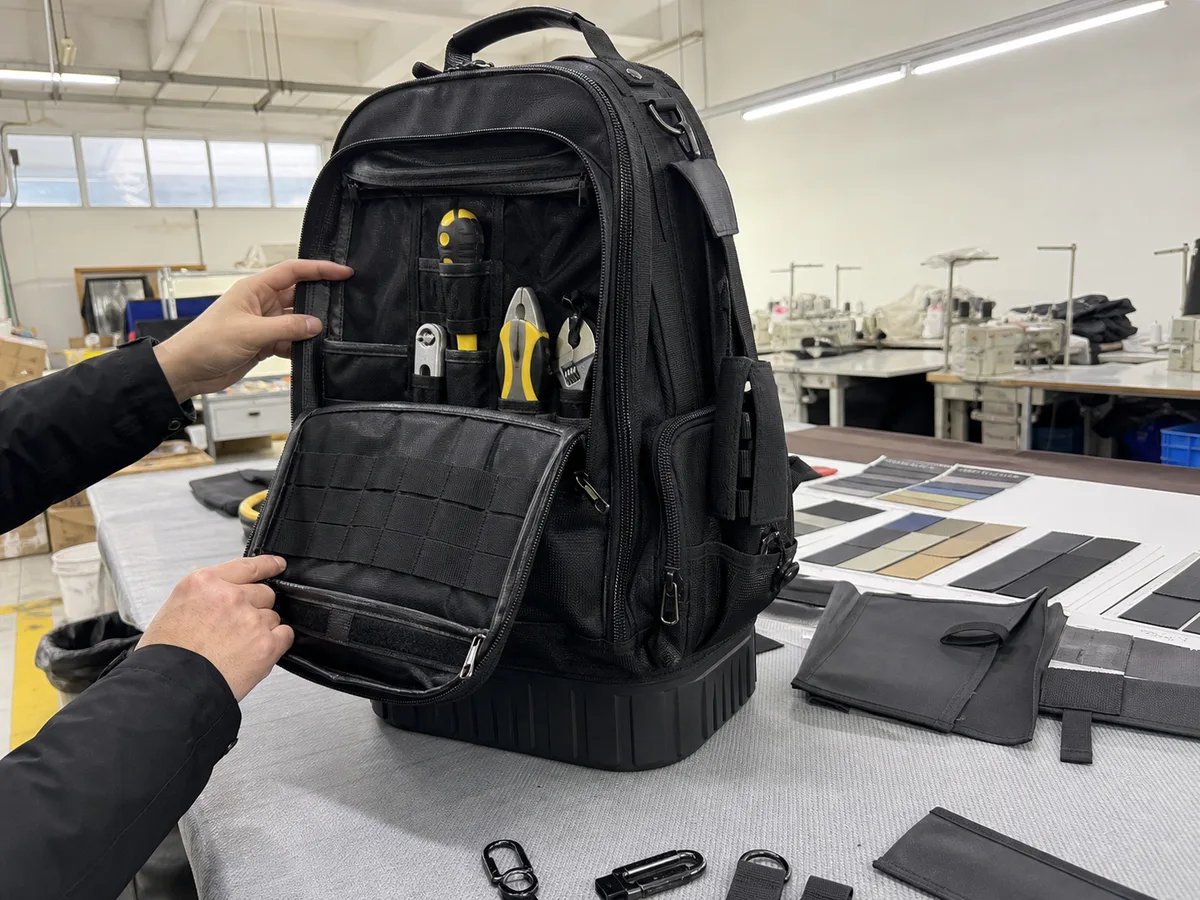
A hard-bottom tool bag RFQ must define 4 material decisions before sampling: shell fabric, bottom structure, webbing reinforcement and stitch standard. For 10–15 kg tool loads, the base and handle stress points matter more than exterior styling.
Choose the shell fabric around abrasion and loaded weight
1680D polyester, 900D polyester and ballistic nylon can all work for tool programs, but the right choice depends on jobsite abrasion, target price, handfeel and whether the buyer needs a retail-ready private-label range.
| Decision | Factory input | Why it matters |
|---|---|---|
| 1680D polyester | Heavy-duty shell fabric with structured feel | Good for field-service buyers that need durability without moving into premium nylon cost. |
| 900D polyester | Mid-weight shell for moderate load programs | Useful when price and weight matter more than maximum abrasion resistance. |
| Ballistic nylon | Higher-cost abrasion direction | Best discussed when the brand tier and target margin justify the upgrade. |
Bottom construction changes the sampling path
A molded rubber base, PE board, PP board or soft reinforced bottom can create very different cost, weight, tooling and packing assumptions. Confirm the bottom before sample approval because it controls standing shape and field durability.
- Molded rubber base: stronger standing support and abrasion resistance, but may need tooling and higher MOQ.
- PE or PP board: useful for structure and cleaner shape with lower complexity than molded rubber.
- Soft reinforced bottom: lighter and simpler, but less stable under loaded tools.
Reinforcement belongs at stress points
Tool bag failures usually appear at handles, shoulder strap anchors, pocket corners, zipper ends and base seams. Ask for reinforcement drawings or close-up sample photos rather than approving only the front view.
| Decision | Factory input | Why it matters |
|---|---|---|
| Handle attachment | Webbing wrap, X-box or bar tack stitching | Controls loaded carry performance. |
| Pocket corners | Bar tack or reinforced stitch points | Reduces tearing when screwdrivers, meters and bits are inserted daily. |
| Base seam | Bottom panel overlap and stitch density | Protects the bag when it is dragged or set down on rough surfaces. |
Where to continue
Continue with custom tool bag manufacturer, bag materials comparison chart, functional bag manufacturing so the support article connects back to the commercial RFQ path, material decisions and functional bag hub.
Send a hard-bottom tool bag RFQ with dimensions, quantity band, sample deadline, destination market and the construction notes listed above.
FAQ
Is 1680D polyester always better for tool bags?
No. 1680D is useful for many heavy-duty tool bags, but the better choice depends on loaded weight, price target, abrasion risk, handfeel, color requirements and reinforcement design.
When is a molded rubber bottom worth using?
A molded rubber bottom is worth reviewing when the bag needs stronger standing shape, abrasion resistance and field-service durability, and when the MOQ and tooling assumptions fit the buyer program.
Which stitch checks matter most for hard-bottom tool bags?
Check handle anchors, shoulder strap points, pocket corners, zipper ends, base seams, logo patch edges and any high-load webbing connection before bulk release.