Bag materials are one of the earliest decisions in a custom bag program, yet they are often discussed too late. The material affects structure, handfeel, logo method, hardware choice, sewing process, MOQ, lead time, packing, and inspection. For B2B buyers, the right question is not simply which material looks attractive. The better question is which material supports the product's use, brand direction, target price, quality expectations, and production plan.
Connect5 Bags works with overseas brands, sourcing teams, and private label buyers that need practical material review during sampling. China sampling support helps compare swatches, trims, and sample behavior before production planning. Buyers should treat material selection as a technical and commercial decision, not only a design preference.
Compare materials by use case, not only appearance
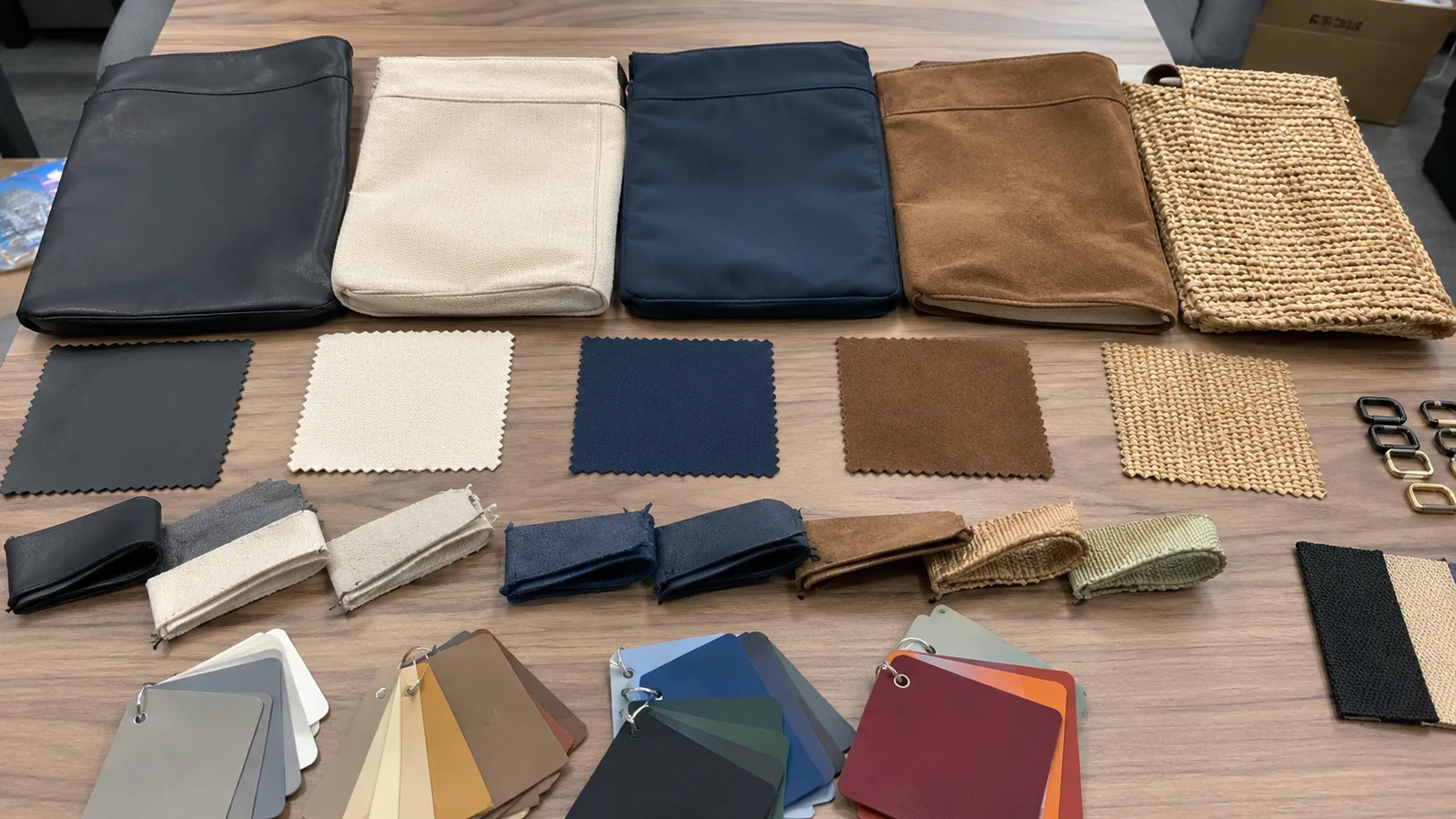
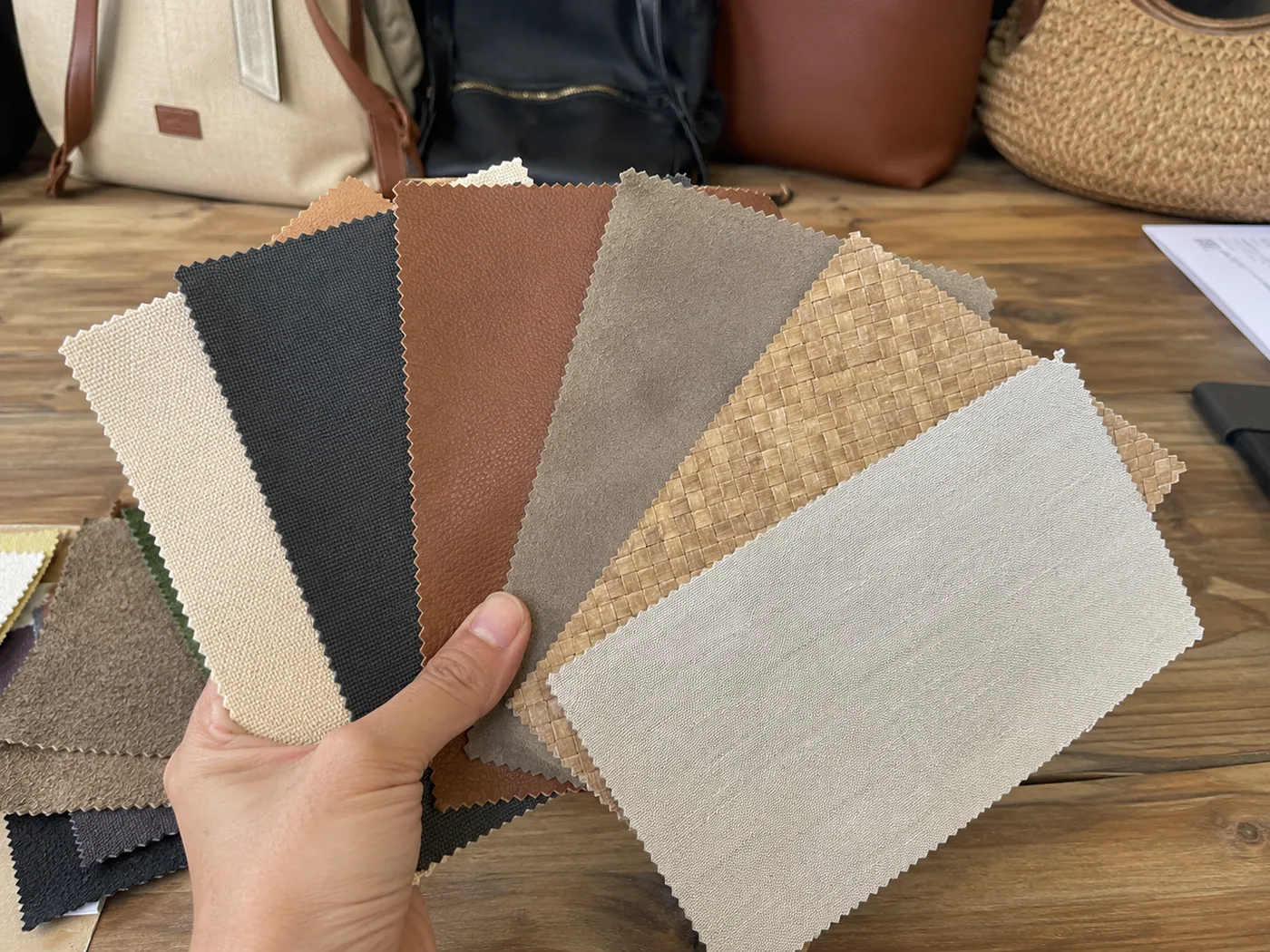
PU, canvas, nylon, suede, and raffia can all be used for bags, but each behaves differently. PU may support structured handbags and fashion totes. Canvas may suit casual totes, promotional bags, and lifestyle products. Nylon and polyester can work well for backpacks, travel bags, sports bags, and foldable totes. Suede and suede-like materials can create a soft seasonal direction. Raffia and woven materials often support resort, beach, and summer ranges. Buyers can start with bag materials and then move to product-specific sample testing.
| Material | Common bag uses | Sampling focus | QC attention |
|---|---|---|---|
| PU | Handbags, structured totes, crossbody bags, cosmetic bags | Thickness, backing, crease behavior, edge finish, logo method | Surface marks, color consistency, adhesion, edge quality |
| Canvas | Totes, casual handbags, promotional bags, pouches | Weight, shrinkage, dyeing, print clarity, sewing tension | Stains, color variation, seam strength, print alignment |
| Nylon or polyester | Backpacks, travel bags, sports bags, foldable totes | Denier, coating, lamination, zipper compatibility, wrinkle behavior | Coating defects, thread tension, zipper stress, packing creases |
| Suede or suede-like | Seasonal handbags, pouches, soft totes, fashion panels | Nap direction, color transfer, cutting direction, lining support | Shade variation, marks, seam cleanliness, packaging protection |
| Raffia or woven | Resort bags, beach totes, seasonal handbags | Variation, edge finishing, handle attachment, lining options | Loose fibers, shape stability, color variation, handwork consistency |
PU material: structure, surface and logo compatibility
PU is widely used in handbag, tote, crossbody, and cosmetic bag development because it offers many surface options, colors, textures, and thicknesses. However, PU should not be approved only from a small swatch. A full sample can reveal how the material folds, creases, stretches, accepts stitching, holds reinforcement, and reacts to logo application. A soft PU may collapse on a structured tote, while a stiff PU may create bulky corners on a small pouch.
When sourcing PU bags, review backing, thickness, surface finish, odor, color, cutting yield, edge finishing, and compatibility with embossing, heat transfer, embroidery, metal plates, or woven labels. For structured products, ask whether reinforcement is needed at the base, handles, zipper areas, and logo panels. A PU decision must be connected to the sample file, not kept as a separate design note.
PU questions for buyers
- Does the bag need soft drape, medium structure, or strong shape retention?
- Will the logo be embossed, printed, attached with a plate, or sewn as a label?
- Are folded edges, edge paint, binding, or turned seams planned?
- How sensitive is the material to scratches, pressure marks, or packing creases?
Canvas: weight, printing and casual structure
Canvas is often selected for tote bags, casual handbags, drawstring bags, and promotional programs. It can look simple, but canvas sourcing requires attention to fabric weight, weave, dyeing, shrinkage, print method, and seam strength. A heavier canvas may support structure but increase cost and bulk. A lighter canvas may fold easily but may not carry weight or present a logo as intended. Buyers planning canvas totes can also review tote bags for category context.
Printing on canvas must be sampled. Screen print, heat transfer, embroidery, woven label, and patch applications all behave differently. A large printed logo may be affected by fabric texture or shrinkage. If the tote is intended for retail, the buyer should also consider lint, thread trimming, stains, and folded packing marks during inspection.
Nylon and polyester: technical options for active categories
Nylon and polyester are common in backpacks, travel bags, duffel bags, sports bags, and foldable totes. The buyer should specify more than color. Denier, coating, lamination, lining, handfeel, wrinkle behavior, abrasion direction, and water-resistance expectations in ordinary use can all affect the final product. For a backpack, the material should work with padding, binding, webbing, and zipper tape. For a foldable tote, it should pack down cleanly without looking too creased.
When using nylon or polyester, ask the factory team to review shell fabric, lining, reinforcement, webbing, zipper, and thread as a system. A strong shell fabric paired with weak webbing or an undersized zipper may still lead to functional problems. Material approval should include a full sample and relevant stress points.
Suede and raffia: seasonal materials need careful handling
Suede and suede-like materials can give handbags, pouches, and totes a soft seasonal look. Buyers should check nap direction, shade variation, color transfer risk, cutting direction, seam cleanliness, and packaging protection. The suede bags category can help teams frame the design direction, but sample review is still needed to confirm production behavior.
Raffia and raffia-like woven materials are common in resort, beach, and summer ranges. They can create attractive texture, but variation, loose fibers, edge finishing, lining support, and handle attachment need review. Buyers can explore raffia bags for category context. For raffia programs, it is important to define the acceptable level of material variation because each piece may not look identical.
Seasonal materials can make a bag line distinctive, but they must be evaluated for cutting, sewing, edge finishing, packing, and inspection before production planning.
Material decisions affect MOQ, lead time and quote stability
A material may be available as stock, semi-custom, or custom. Stock materials can support faster sampling, but color and texture options may be limited. Semi-custom materials may require additional sourcing coordination. Fully custom colors, coatings, prints, or weaves can affect MOQ, lead time, and quote stability. The buyer should ask which material assumptions are used in the quote and whether alternatives are available.
The sample development process should include material approval at the correct stage. If the buyer approves a shape with one material and later changes to another, the sample may need revision because structure, sewing tension, and trim compatibility can change. This is especially true for bags with reinforcement, curved zippers, edge finishing, or complex logo applications.
FAQ
Can one bag use multiple materials?
Yes. Many bags combine PU, canvas, nylon, mesh, lining, webbing, suede panels, or raffia elements. The sample should check how the materials sew together, whether colors match, and whether thickness differences affect construction.
Should buyers choose material before or after the sample?
Buyers should choose a material direction before the first sample, then approve the material through swatches and the full sample. Final production planning should use confirmed material references.
Why does a material swatch look different from the finished bag?
A swatch does not show folding, seam tension, reinforcement, lining interaction, surface pressure, logo application, or packing. Full sample review is necessary before bulk production.
How can brands compare material options fairly?
Compare material grade, thickness, backing, color, finish, test requirements where relevant, logo compatibility, MOQ, lead time, and full-sample behavior. Avoid comparing only swatch appearance.
Review material options with Connect5
Prepare your product type, material direction, reference images, logo method, target quantity, color plan, target market, and quality concerns. Share the brief through Connect5 contact so the team can review material options, sample requirements, MOQ drivers, QC checks, and production readiness.