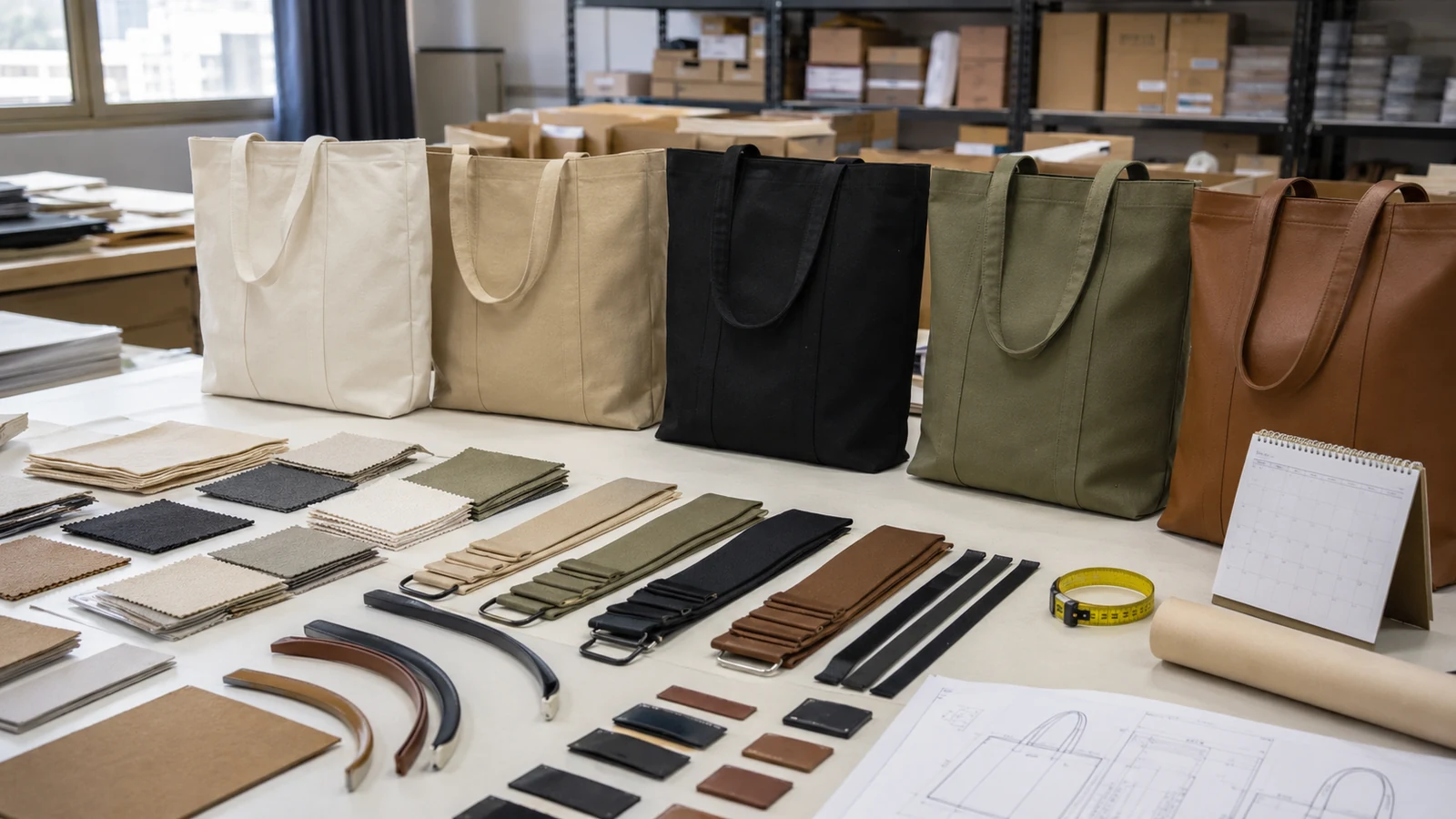
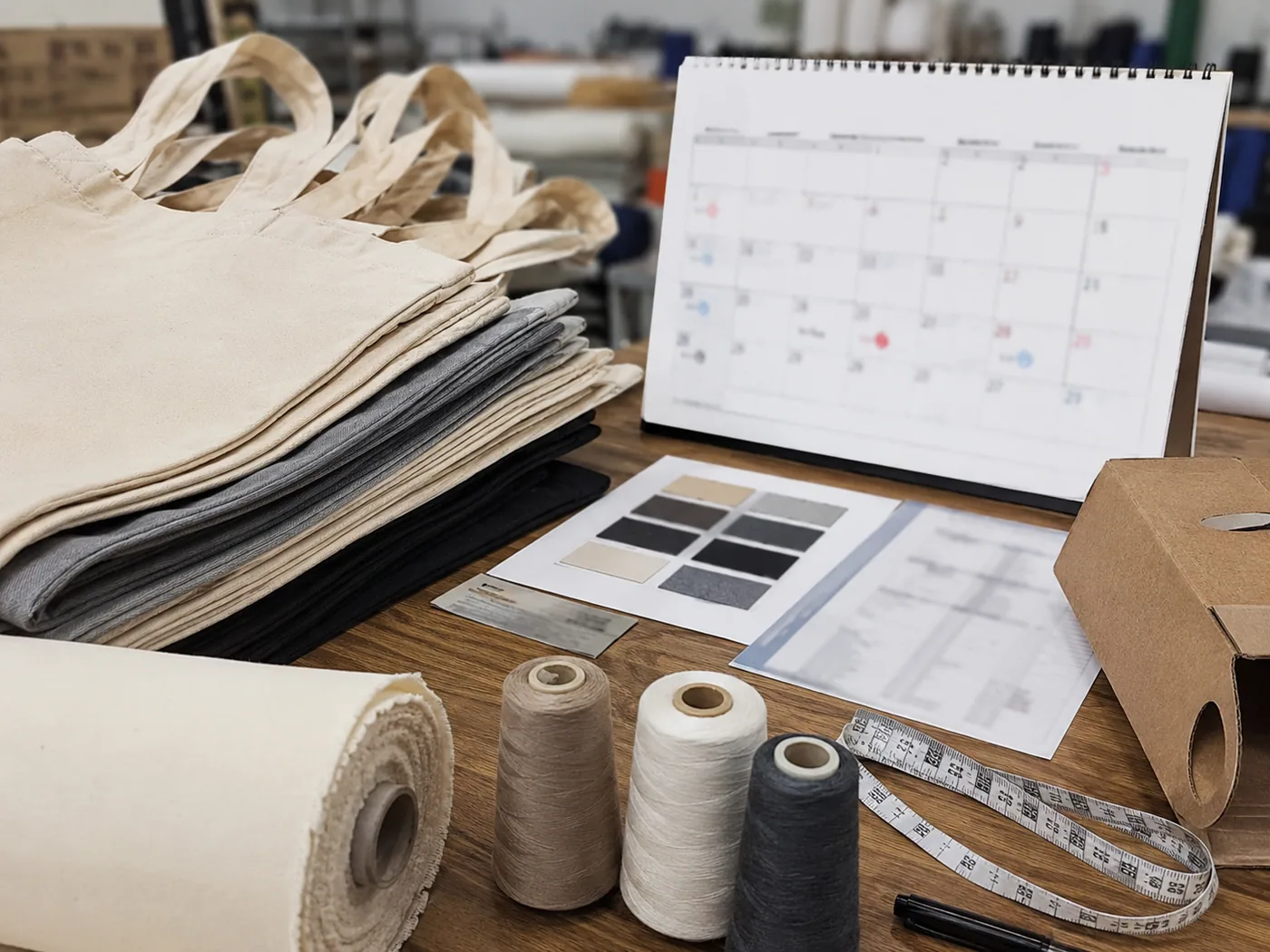
A custom tote bag manufacturer can support many different buyer goals: retail tote programs, canvas promotional bags, structured lifestyle totes, beach and resort totes, laptop totes, grocery totes, gift-with-purchase bags, and private label accessories. Because the category appears simple, buyers sometimes underestimate the number of technical choices involved. A tote bag may need to stand upright, fold flat, carry weight, protect a laptop, hold shape on a shelf, or support a brand logo without distortion.
For B2B sourcing teams, the goal is to prepare a tote bag program that can be sampled, quoted, inspected, packed, and exported with fewer unclear assumptions. Connect5 Bags works with buyers that need China sampling support, material and trim review, and Cambodia production planning. The process works better when the RFQ describes the tote's function, not only its appearance.
Start with the tote bag brief
A tote bag brief should define use case, size, construction, material, handles, closure, pockets, branding, packaging, and target quantity. A shopping tote made from cotton canvas has different requirements from a structured PU tote with lining and metal feet. A beach tote made from raffia or woven material needs different edge finishing and shape review than a foldable nylon tote. Buyers can review the tote bags category and the custom tote bag manufacturer page to align terminology before sending an inquiry.
Key decisions to include
- Open top, zipper top, snap closure, magnetic closure, drawstring inner bag, or flap detail.
- Flat handles, rope handles, PU handles, webbing handles, shoulder straps, or detachable crossbody straps.
- Lining, internal pocket, laptop sleeve, bottle pocket, zipper pocket, or simple unlined construction.
- Bottom gusset, reinforced base, piping, binding, contrast panels, or foldable construction.
- Logo method, such as screen print, embroidery, woven label, leather-like patch, metal plate, or heat transfer.
- Retail, e-commerce, bulk, or gift packaging requirements.
Material choice drives MOQ and lead time
The tote bag material often decides how flexible the program can be. Canvas is popular for casual and promotional totes because it can be printed and sewn in simple structures, but weight, shrinkage, dyeing, and color matching must be checked. Nylon and polyester support foldable, travel, sports, and utility totes, but coating, denier, lining, and color availability affect development. PU works for structured fashion totes, though thickness, backing, crease behavior, and reinforcement must be reviewed. Raffia and woven materials work for resort or seasonal collections, but variation and edge durability need attention.
Material review should begin with the bag materials resource, then move into sample testing. Buyers should ask the factory team whether the desired material is stock, semi-custom, or custom-developed. Stock options may support more efficient sampling, while custom colors, special coatings, and unusual weaves may add sourcing steps and MOQ considerations.
| Tote material | Typical use case | What to check in sample | Impact on quote |
|---|---|---|---|
| Canvas | Promotional, retail, casual lifestyle, grocery programs | Fabric weight, shrinkage, print clarity, seam strength | Cost depends on weight, dyeing, printing, and lining |
| Nylon or polyester | Foldable, travel, sports, utility totes | Coating, denier, wrinkle behavior, zipper compatibility | Color availability and coating can affect sourcing |
| PU | Fashion, work, structured private label totes | Creasing, reinforcement, edge finish, logo method | Thickness, backing, lining, and hardware influence cost |
| Raffia or woven | Resort, summer, beach, seasonal ranges | Variation, edge stability, handle attachment, lining support | Material yield and handwork level may affect planning |
MOQ is not one number for every tote
MOQ is affected by material purchase requirements, color count, printing method, trim customization, packaging, and production schedule. A simple canvas tote with stock fabric and a one-color print is different from a multi-color structured tote with custom hardware and retail packaging. A buyer should share the target quantity by color and SKU, then ask which parts of the design are driving MOQ. This leads to a more useful discussion than asking for a universal minimum.
When a buyer has a smaller launch, the factory team may review whether stock materials, shared trims, fewer colorways, or simplified packaging can make the first order more practical. When the buyer has a larger program, the team can review whether custom materials, color matching, or trim tooling are justified. Connect5 can help review these tradeoffs during bag sourcing discussions.
MOQ variables to clarify
- Material MOQ by color, thickness, finish, and supplier.
- Logo method MOQ, especially for custom woven labels, metal plates, or zipper pullers.
- Printing setup, color separation, or embroidery requirements.
- Packaging component MOQ, including hangtags, barcode labels, dust bags, and stickers.
- Whether the order quantity is split across too many colors or SKUs.
Lead time depends on approvals, not only sewing
Lead time must be discussed in stages: sample development, sample revision, material purchasing, trim preparation, production scheduling, inline checks, final inspection, packing, and export handover. A tote bag with a known material and simple logo may move through these stages differently from a tote that requires custom fabric, multiple prints, or hardware tooling. Buyers should not treat sewing time as the full lead time.
The sample development process is where many lead time questions are resolved. If the sample is approved with clear comments and a confirmed BOM, production planning becomes more controlled. If the buyer changes material, print size, logo placement, or packaging after sample approval, the schedule may need to be reviewed again.
A realistic tote bag timeline starts when the brief, materials, trims, logo files, sample comments, quantity, and packaging requirements are clear enough for production planning.
Quality checks for tote bag production
Tote bag QC should match the use case. A grocery tote needs load-bearing seam strength and handle security. A fashion tote needs shape, lining, logo placement, and trim finish. A laptop tote needs dimensions, padding, pocket function, and zipper access. A beach tote needs material variation control, sand-resistant packaging logic, and handle attachment review. Before production, the buyer and factory team should define which defects are critical, major, or minor.
Practical checks include measurement tolerance, handle drop, stitching, seam allowance, bottom shape, print alignment, logo placement, color consistency, zipper function, pocket placement, lining fit, thread trimming, stains, odor, packaging, and carton marking. Buyers should connect these checks to the approved sample, not only to a general inspection checklist.
FAQ
What information is needed to quote a custom tote bag?
Share dimensions, material preference, handle type, lining and pocket details, closure type, logo method, packaging, target quantity by color, target market, and reference images or a physical sample. These details help the team quote comparable specifications.
Can a tote bag manufacturer help choose materials?
Yes. The factory team can suggest material options based on target use, price direction, structure, and logo method. The buyer should still approve swatches and a full sample before production planning.
Why do tote bag prices vary so much?
Price differences often come from fabric weight, lining, reinforcement, handle construction, printing, hardware, packaging, quality requirements, and order quantity. Two totes with the same size can have very different BOMs.
Should we approve a print strike-off before the full tote sample?
For important logos or large artwork, a print strike-off can reduce risk. It helps confirm color, scale, position, and material compatibility before the full sample or production print run.
Send a tote bag RFQ to Connect5
Prepare your tote dimensions, material direction, artwork, handle and closure details, color plan, packaging needs, target quantity, and target market. Share the brief through Connect5 contact so the team can review sampling, MOQ drivers, material options, QC points, and export-ready production planning.