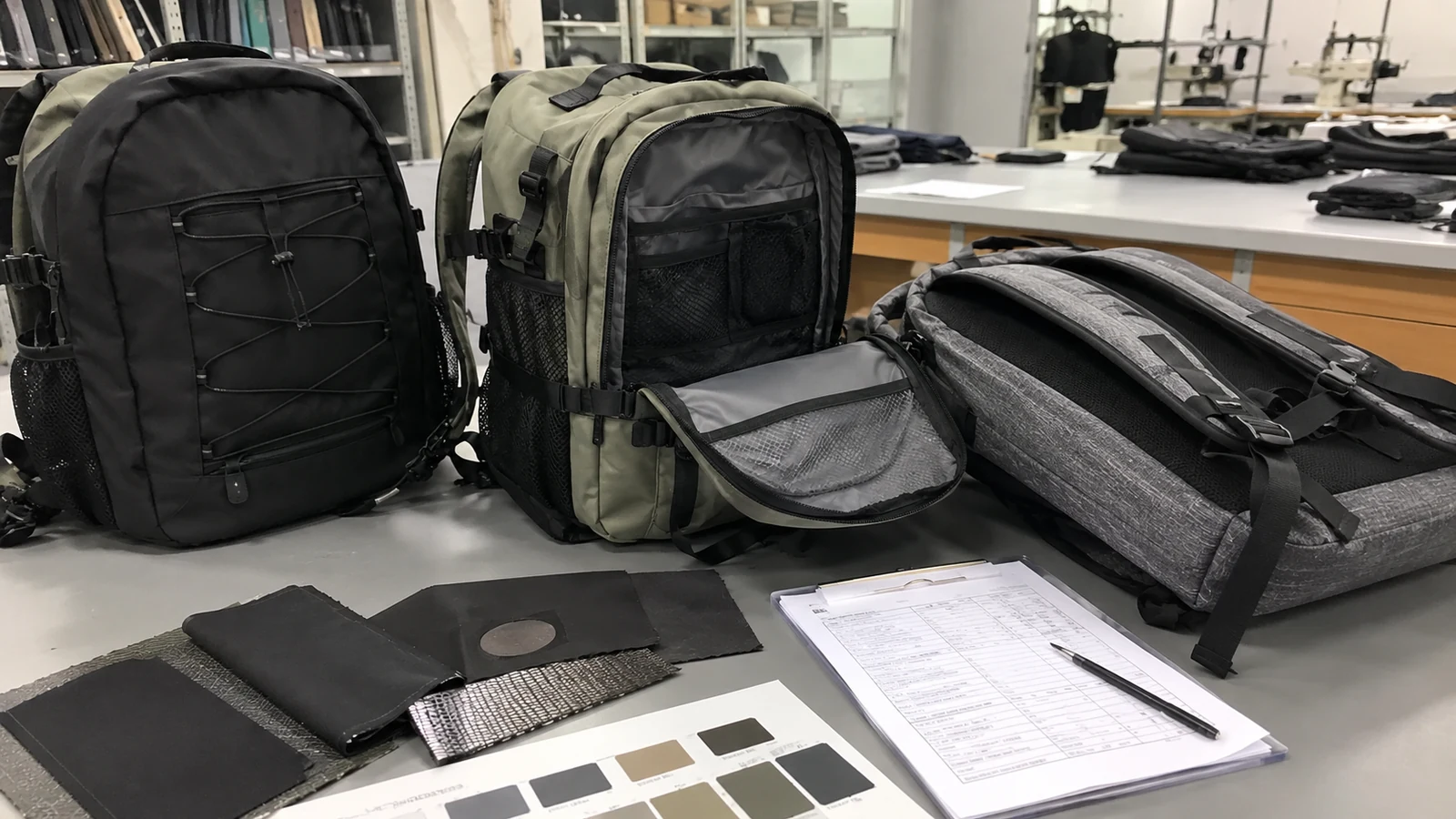
Searching for a backpack manufacturer China often means the buyer has moved beyond general inspiration and now needs a factory team that can manage structure, function, materials, trims, sampling, and inspection. Backpacks are more technical than many bag types because they interact with the body, carry weight, and often include multiple compartments, padding, webbing, buckles, zippers, binding, and logo details. A sourcing team should approach backpack development with a checklist rather than a short product description.
Connect5 Bags supports B2B buyers that need custom backpack development with China sampling support and production planning. The right discussion begins with the user's carrying needs, the product category, and the target market. A school backpack, daily commuter backpack, sports backpack, travel backpack, and outdoor-inspired pack can use similar components while requiring different construction priorities.
Classify the backpack before starting the RFQ
Backpacks vary widely. A lightweight promotional backpack may use simple nylon, drawstring details, and basic webbing. A commuter backpack may need laptop padding, internal organization, water bottle pockets, and more structured shoulder straps. A travel backpack may need expansion panels, lockable zippers, luggage sleeve, and stronger handles. Because of this, the first step is to define the segment and intended load.
Buyers can review the backpack manufacturer China page as a starting point, then prepare SKU-level information for the factory team. The more technical the bag, the more important it is to define structure and performance expectations before price comparison.
| Backpack type | Core development focus | Common components | QC priority |
|---|---|---|---|
| Daily commuter | Comfort, laptop protection, organization, clean appearance | Padded sleeve, webbing straps, zipper compartments, lining | Measurement, padding, zipper function, strap strength |
| Travel backpack | Capacity, access, load distribution, packing function | Compression straps, luggage sleeve, strong handle, multiple zippers | Seam reinforcement, load points, hardware function |
| Sports backpack | Durability, ventilation, wet/dry separation, ease of cleaning | Mesh panels, coated fabric, elastic, shoe pocket, buckle | Material performance, pocket access, webbing strength |
| Promotional backpack | Simple construction, brand area, cost control, packing efficiency | Basic fabric, drawstring or zipper, printed logo, simple lining | Print clarity, seam consistency, packing count |
Translate function into construction details
A backpack brief should include volume target, size, opening method, compartment plan, laptop or tablet size, pocket layout, shoulder strap construction, back panel, handle, webbing, buckle, zipper, lining, bottom reinforcement, and branding. If the buyer only provides exterior photos, the factory team must make too many assumptions about internal structure and load points. Those assumptions can affect sampling accuracy and quotation.
Backpack construction questions
- What weight should the backpack reasonably carry in normal use?
- Does it need a padded laptop sleeve, and for which device size?
- Should the back panel be flat, padded, quilted, breathable, or luggage-compatible?
- Are the shoulder straps simple webbing, padded straps, ergonomic straps, or detachable straps?
- Does the bottom need reinforcement, coating, feet, or a separate panel?
- Which compartments need zipper, elastic, mesh, Velcro-style closure, or slip pockets?
Buyers can use the broader sourcing resource to frame these questions before reaching out. The goal is to give the manufacturer enough information to identify risks, not to force the buyer to solve every detail alone.
Materials and trims are performance decisions
For backpacks, material selection is tied to weight, durability, water resistance direction, handfeel, and appearance. Nylon and polyester are common, but denier, coating, lamination, lining, and color availability must be reviewed. Canvas can work for lifestyle backpacks, though weight and shrinkage must be considered. PU panels can add structure or visual contrast, but they need checking at folded edges and high-friction areas. Mesh can support ventilation, but stretch, abrasion, and sewing stability matter.
Trims can be just as important as the main material. Zippers need suitable gauge and smooth travel. Buckles and adjusters must match webbing width. Webbing should have appropriate thickness and weave. Elastic pockets should recover after use. Logo patches and rubber labels must be attached securely. The bag hardware and trims reference can help teams prepare detailed component notes.
Component decisions to confirm
- Zipper brand direction, gauge, tape color, puller shape, and whether openings are straight or curved.
- Webbing width, thickness, color, weave, and compatibility with adjusters.
- Padding thickness for shoulder straps, back panel, laptop sleeve, and bottom.
- Binding type, thread color, seam reinforcement, and bar tack points.
- Label method, logo patch material, reflective trim, or custom puller requirements.
Sample development should include wear logic
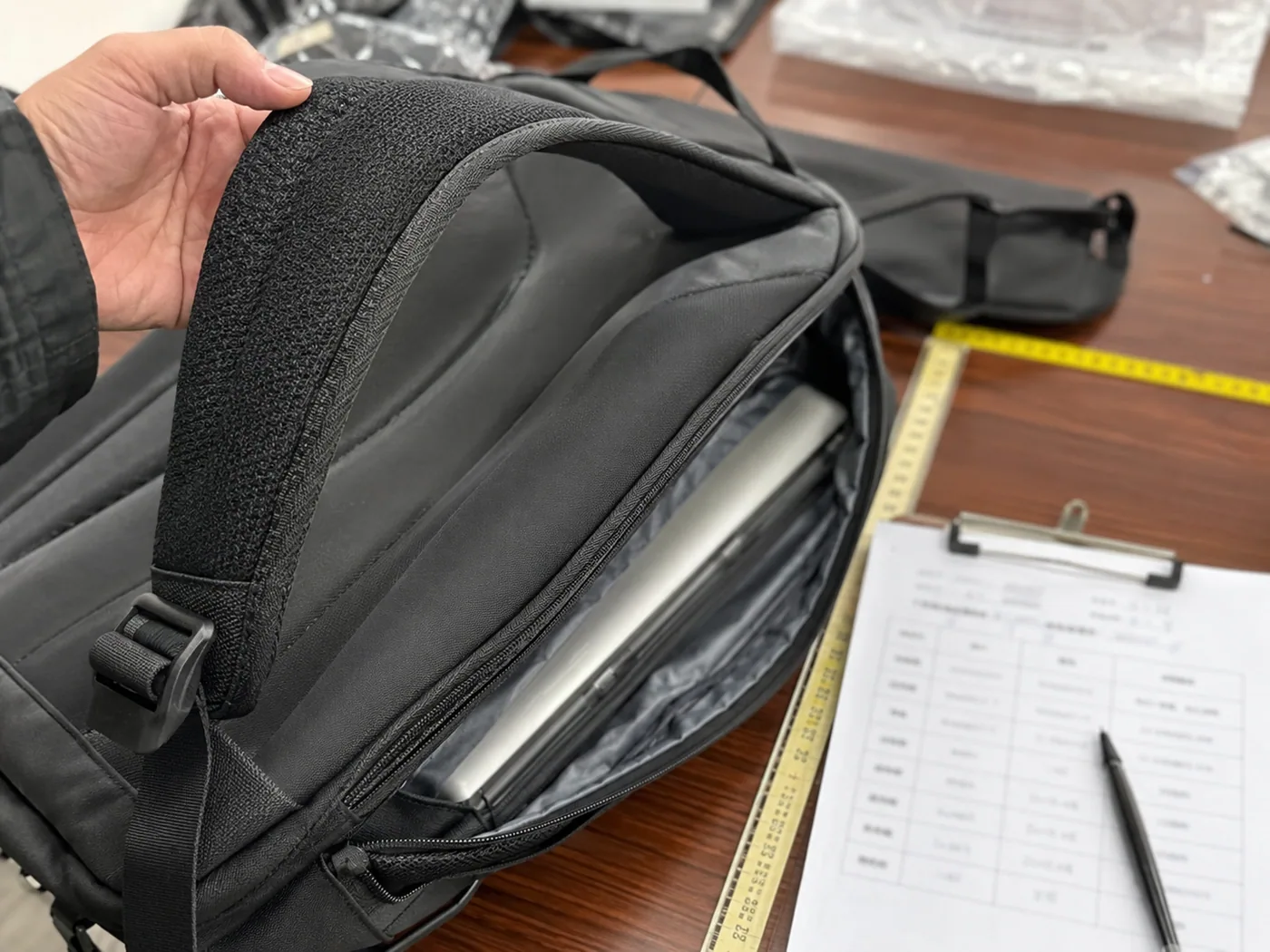
Backpack samples must be reviewed empty and filled. A sample may look correct on a table but feel wrong when carried. During the sample development process, the buyer should check strap angle, back panel comfort, zipper access, handle grip, pocket reach, and balance when loaded. If the backpack will carry a laptop, test the intended device size and check the bottom protection.
Sample comments must be specific. Instead of saying the strap feels poor, say whether the strap needs wider webbing, thicker padding, different angle, longer adjustment range, softer binding, or a reinforced attachment point. Instead of saying the bag is too bulky, identify whether the gusset, padding, fabric stiffness, or pocket structure is causing the issue.
For backpack development, a useful sample approval includes visual approval, functional approval, load-point review, component confirmation, and packing review.
MOQ and quote variables for backpacks
Backpack pricing is affected by material, lining, padding, zipper count, compartment complexity, webbing, buckles, logo trim, labor time, packaging, and QC requirements. MOQ may be influenced by fabric purchasing, custom color, zipper tape, webbing dyeing, rubber patches, woven labels, or packaging components. A buyer should share a target quantity and ask which details create MOQ pressure.
When comparing quotes, make sure each manufacturer is quoting the same fabric specification, lining, zipper gauge, strap construction, padding, buckle type, packaging, and inspection expectation. A backpack with thinner padding or fewer reinforcement points may look cheaper on paper but may not match the intended use. Connect5 can review program requirements through its capabilities workflow to help buyers align development and production planning.
QC checklist for backpack production
Backpack QC should cover measurement, capacity, seam strength, strap attachment, handle reinforcement, zipper function, buckle function, webbing adjustment, lining fit, pocket placement, padding position, thread trimming, stains, odor, logo placement, packaging, and carton marks. The quality standards reference can help buyers build a product-specific inspection checklist.
It is also helpful to mark critical load points in the sample file. These may include shoulder strap anchors, top handle, side compression straps, bottom seams, laptop sleeve seams, and buckle attachments. Production teams should know where reinforcement is required and which defects should trigger immediate review.
FAQ
Can a backpack manufacturer work from a reference sample?
Yes, but the buyer should explain which parts of the reference must be kept, changed, or avoided. Dimensions, material direction, internal layout, strap construction, and logo details still need written confirmation.
What makes backpack development more complex than tote bags?
Backpacks usually include more compartments, padding, webbing, zippers, load-bearing seams, and body-contact points. The sample must be reviewed for function and comfort, not only appearance.
Do we need to specify zipper gauge in the RFQ?
If you already know the requirement, include it. If not, describe the intended use and opening size so the factory team can suggest a suitable zipper direction for review.
How should a sourcing team compare backpack factories?
Compare sample quality, construction understanding, material sourcing, trim coordination, communication clarity, QC planning, and the ability to explain tradeoffs. Avoid comparing only the first unit price.
Prepare your backpack sourcing file
Before contacting Connect5, prepare your backpack type, dimensions, capacity target, pocket plan, material direction, component notes, logo files, target quantity, packaging needs, target market, and inspection concerns. Share the file through Connect5 contact so the team can review sampling needs, component choices, QC priorities, and production readiness.