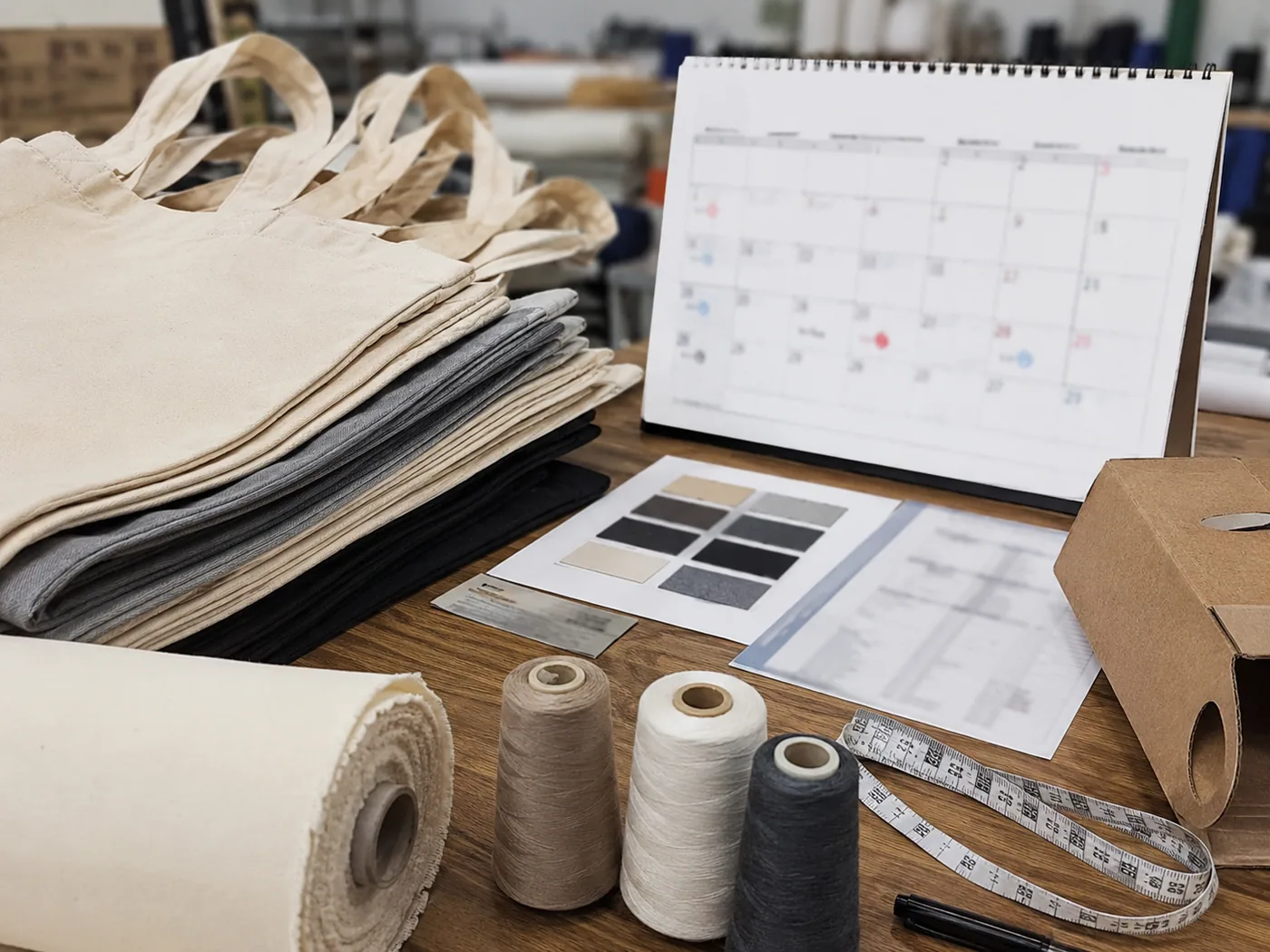
Custom tote bags with logo can be a simple promotional item, but the quote becomes unreliable when the buyer only sends a logo and a quantity. A useful tote brief connects the bag use case, material, logo method, packing plan and deadline before the supplier starts pricing.
Start with the tote use case
The same tote shape can serve very different jobs. A bookstore retail tote, a museum gift-shop tote, a nonprofit fundraising tote and a conference attendee tote should not be priced from the same vague request.
| Buyer route | Best starting point | Quote risk |
|---|---|---|
| Event tote | Lightweight cotton, non-woven or polyester | Print deadline, carton labels and delivery date |
| Retail canvas tote | Canvas weight, handle drop, gusset and logo size | Material weight and packing expectations |
| Premium kit tote | Zipper, pocket, lining, woven label or embroidery | Construction details added too late |
Cost drivers for custom tote bags
The main cost drivers are material, size, handle construction, print method, number of print colors, packing, carton plan and destination market. A quote for custom tote bags is stronger when those inputs are known before the first sample.
What to send before asking for pricing
- Target quantity and whether this is a one-time run or repeat program.
- Tote size, handle drop, gusset requirement, zipper or pocket needs.
- Logo artwork, print color count, placement and brand-color requirements.
- Material direction: cotton canvas, RPET, polyester, nylon, non-woven or unsure.
- Packing route: bulk cartons, individual bag, hangtag, insert card or kit packing.
- Destination market, deadline and any event or retail launch date.
When to use a broader logo bag route
If the team is still choosing between tote, pouch, drawstring bag, backpack or duffel, start with the custom bags with logo route before locking the tote format. If the tote category is already clear, use the custom tote bags quote path.
Send a tote bag RFQ with quantity, artwork, material direction and delivery market.