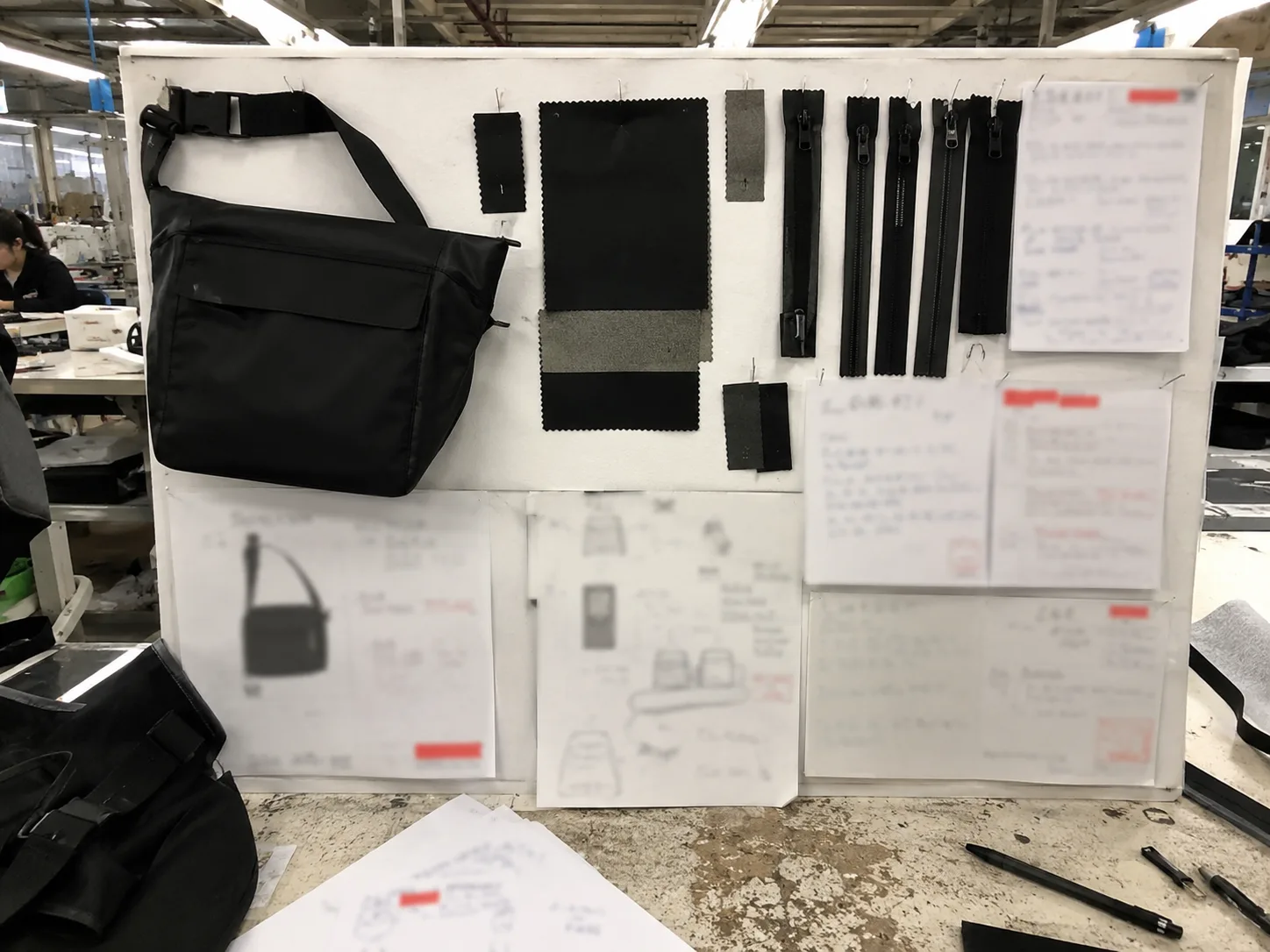
Foam and divider planning should define 4 equipment facts and 3 sample checks: device weight, damage risk, accessory list, shell type, plus foam firmness, divider movement, and fit-photo approval before bulk production.
Match foam firmness to equipment risk
Foam choice should start from device weight, surface sensitivity, accessory movement and how the case is carried. A light accessory kit, electronics bundle and instrument case can need different foam firmness even at the same outer size.
| Decision | Factory input | Why it matters |
|---|---|---|
| Device weight | Unit weight and loaded case weight | Helps select foam firmness, strap structure and handle reinforcement. |
| Surface risk | Scratch risk, screen area, lens surface, connector points or calibration points | Controls lining, separator and movement tolerance. |
| Shell type | Soft fabric, semi-rigid panel or molded EVA shell | Controls protection structure, tooling and sample path. |
Build the divider map from accessories
Divider planning should separate high-contact accessories before the exterior is finalized. Batteries, cables, lenses, probes, adapters and chargers need assigned zones so the sample can be checked against real loading behavior.
- Separate heavy accessories from sensitive screens, lenses or instrument faces.
- Confirm whether dividers need to be removable, sewn-in, hook-and-loop or foam-cut.
- Review zipper clearance and lid compression with the loaded divider map.
QC checks should prove fit, movement and release details
Equipment case QC should not stop at exterior dimensions. Ask for loaded fit photos, divider stability, foam edge finish, zipper movement, handle attachment, logo placement and carton pack-out before bulk release.
| Decision | Factory input | Why it matters |
|---|---|---|
| Fit-photo approval | Loaded sample photos from top, side and lid-close view | Shows whether equipment movement is controlled. |
| Divider movement | Shake, lift or access check based on buyer-defined use | Identifies loose accessory zones before bulk cutting. |
| Pack-out release | Insert card, barcode, polybag and carton mark photo | Reduces channel errors after production. |
Where to continue
Continue with equipment carrying case manufacturer, camera cube divider guide, factory proof pack so the support article connects back to the commercial RFQ path, material decisions and functional bag hub.
Send an equipment case foam RFQ with dimensions, quantity band, sample deadline, destination market and the construction notes listed above.
FAQ
What foam details must be sent in an RFQ?
Send equipment weight, device dimensions, accessory list, shell type, desired firmness, divider map, protection concerns, quantity, sample timing and destination market.
Can the factory choose foam density without equipment data?
The factory can suggest options, but final foam and divider approval needs equipment dimensions, weight, accessory layout and buyer-defined protection expectations.
Which sample checks matter for foam divider cases?
Check loaded fit photos, divider movement, foam edge finish, lid clearance, zipper movement, handle strength, logo placement and retail or export pack-out.