Reusable shopping bags
The main kinds of reusable grocery and shopping bag, what each material is like, the sizes supermarkets and shops use, how many times a bag has to be reused to pay back its footprint, and what to specify for a branded bag.
On this page
Reusable bag materials compared
| Material | What it is | Strengths | Limits |
|---|---|---|---|
| Non-woven polypropylene (NWPP) | Spun-bonded PP sheet, usually 70–120 GSM | Low cost, light, takes bright print; the classic supermarket “bag for life” | Wears and tears at the handles; hard to wash |
| Woven polypropylene (laminated) | Woven PP tape, often laminated with a glossy printed film | Strong, wipe-clean, full-colour photo print | Stiffer; the laminate can crack with folding |
| RPET | Fabric (woven or non-woven) made from recycled PET bottles | Recycled content story, foldable versions | Recycled claims need supplier certificates |
| Cotton or canvas | Woven cotton, 4–12 oz; see canvas tote bags | Washable, soft, premium feel, long life | Heaviest footprint per bag, so it has to be used many times |
| Jute and juco | Jute, or a jute-cotton blend, often laminated inside | Natural look, rigid and strong | Coarse surface limits fine print; bulky |
| Polyester or nylon (foldable) | Thin woven fabric that folds into its own pouch | Fits in a pocket, washable, very light | Thin fabric shows wear; print sits on top |
Compare these with other bag fabrics in our bag materials chart.
How many times must a reusable bag be used?
A reusable bag only beats a single-use bag once it has been used enough times. The UK Environment Agency’s life cycle study of supermarket carrier bags (2011, based on 2006 data) found that, for climate impact alone, compared with a thin HDPE carrier bag used once:
- a paper bag needed about 3 uses;
- a heavier LDPE “bag for life” about 4 uses;
- a non-woven PP bag about 11 uses;
- a cotton bag about 131 uses.
A 2018 study for the Danish Environmental Protection Agency, which looked at more environmental indicators than climate alone, reached much higher numbers for cotton and found woven PP bags performed better than non-woven PP. The practical lesson is the same in both: choose a bag people will keep and carry for years, and make it sturdy enough to last that long.
Reusable grocery bag sizes
| Type | Width × height × gusset | Typical use |
|---|---|---|
| Grocery tote (supermarket) | about 40–45 × 35–40 × 18–25 cm | Weekly shopping; boxed base stands in a trolley |
| Wine or bottle bag | about 25–28 × 35 × 18 cm, with dividers | Four or six bottles |
| Flat shopping tote | about 38 × 42 cm, no gusset | Clothes, books and light shopping |
| Foldable tote | about 40 × 40 × 10 cm open; pouch about 10 × 10 cm | Kept in a pocket or handbag for unplanned shopping |
| Insulated grocery bag | about 40 × 35 × 25 cm with foam lining | Chilled and frozen food; see lunch bags for how insulation works |
More tote dimensions are in our tote bag sizes guide.
Foldable and collapsible totes
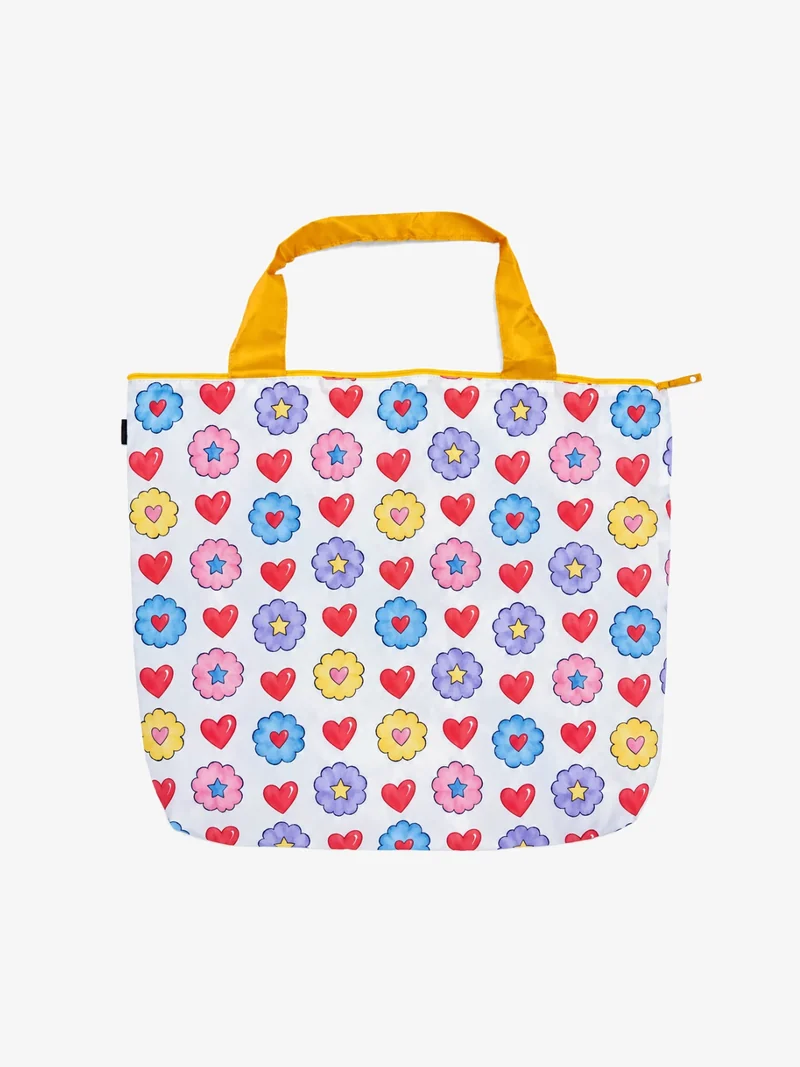
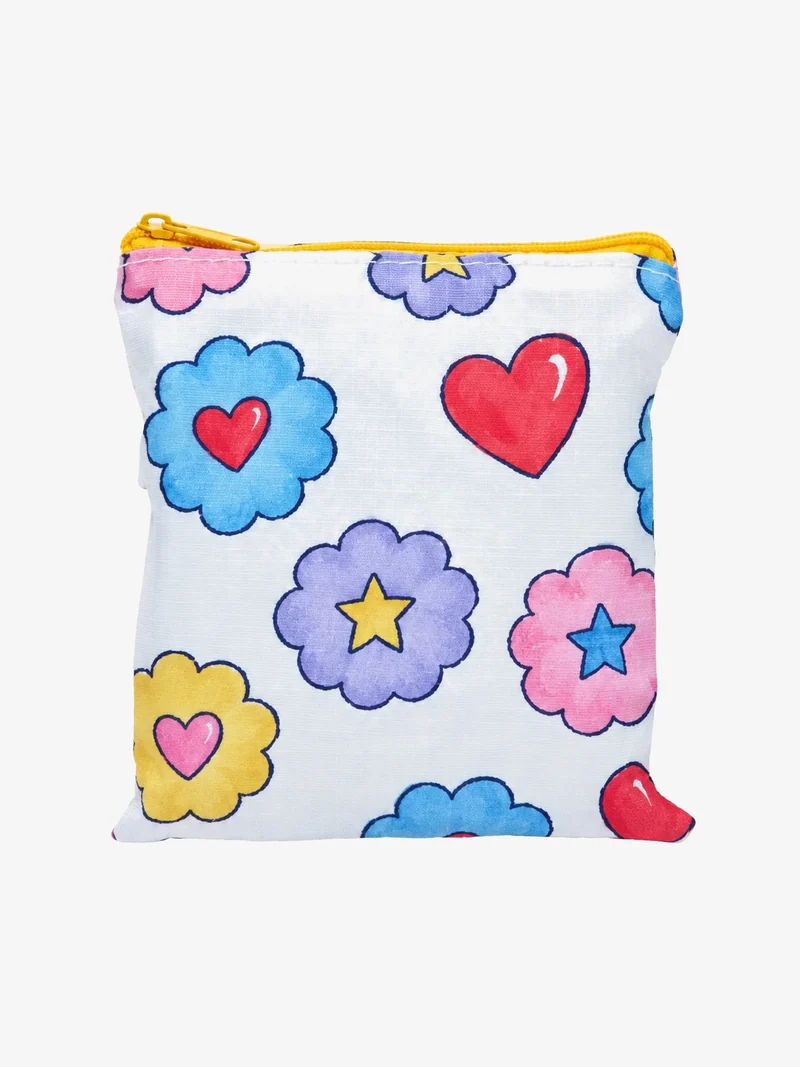
Foldable totes are the reusable bag people actually carry: a thin polyester, nylon or RPET tote that folds into an attached pouch or its own inside pocket, small enough for a pocket or keyring. Good ones have reinforced handle joins, a flat-felled or bound seam inside and a pouch that is easy to refill. Example: foldaway printed tote. All-over prints hide wear well and make the bag recognisable as a brand item.
Branded reusable bags for shops and brands
Retailers, supermarkets and brands order reusable bags to sell at the till, to give with a purchase or as merchandise. To get a quote, give the material and weight, size and gusset, handle type and length, print method and colours, any inside pocket or pouch, and the packing per carton. Where you will claim recycled content, ask for the supplier’s material certificates up front.
Connect5 makes shopping bags and totes in our Guangdong factory, alongside handbags and cosmetic bags (see About Us). For tote styles to start from, browse the fashion collection, or read how custom tote bags are made.
Questions buyers ask
What is the best material for reusable grocery bags?
For everyday groceries, woven or non-woven polypropylene and RPET are light, strong and low in cost; cotton canvas lasts longest and washes well but has to be reused many more times to pay back its footprint.
How many times do you need to use a reusable bag?
In the UK Environment Agency study, about 11 times for a non-woven PP bag and about 131 times for a cotton bag to match a single-use plastic bag on climate impact.
What size is a standard reusable grocery bag?
Roughly 40 to 45 cm wide, 35 to 40 cm tall and 18 to 25 cm deep, with a boxed base so it stands in a trolley.
Can reusable shopping bags be washed?
Cotton, polyester and nylon bags can be washed gently; non-woven and laminated PP bags should be wiped clean, as washing weakens them.
What is a foldable tote bag?
A lightweight polyester, nylon or RPET tote that folds into an attached pouch, so it can be carried in a pocket or handbag and used for unplanned shopping.