Types of backpacks
The main backpack styles, how they are built and what each is for: everyday and laptop backpacks, school and kids’ bags, fashion minis, see-through mesh and clear bags, and outdoor and travel packs.
On this page
Everyday, work and laptop backpacks
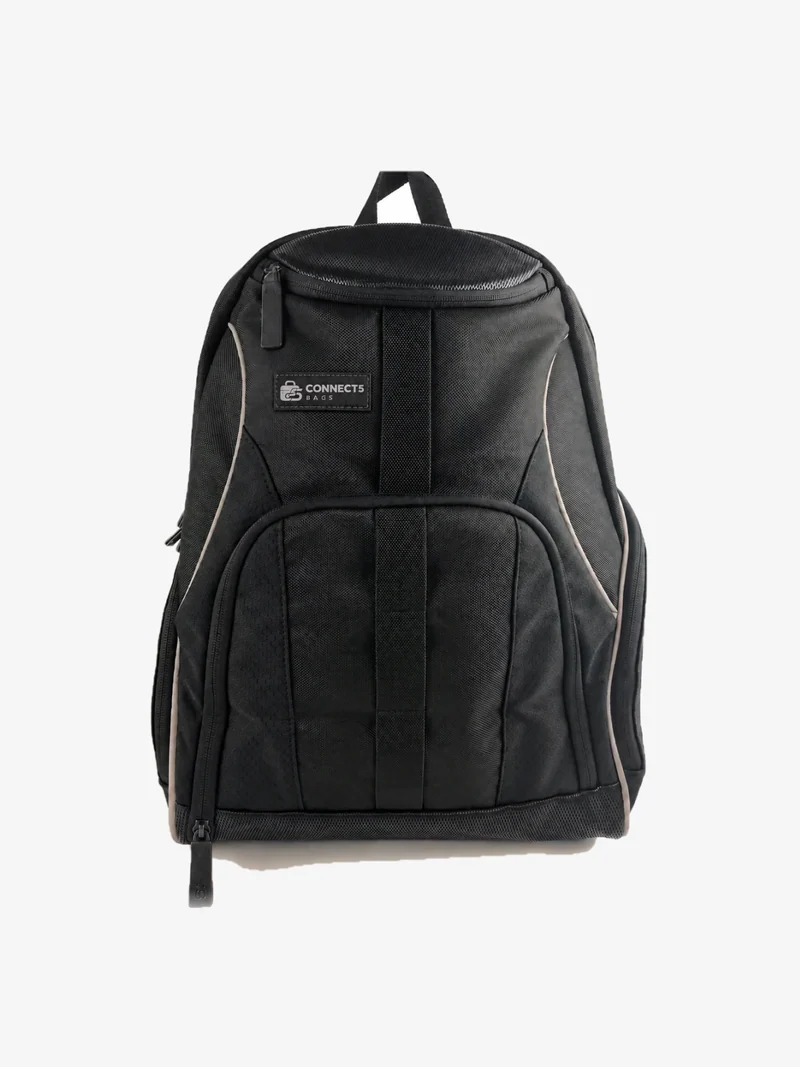
- Daypack
- The standard everyday backpack, about 18–28 litres, with a main compartment, a front pocket and two side bottle pockets. Example: dome-top backpack.
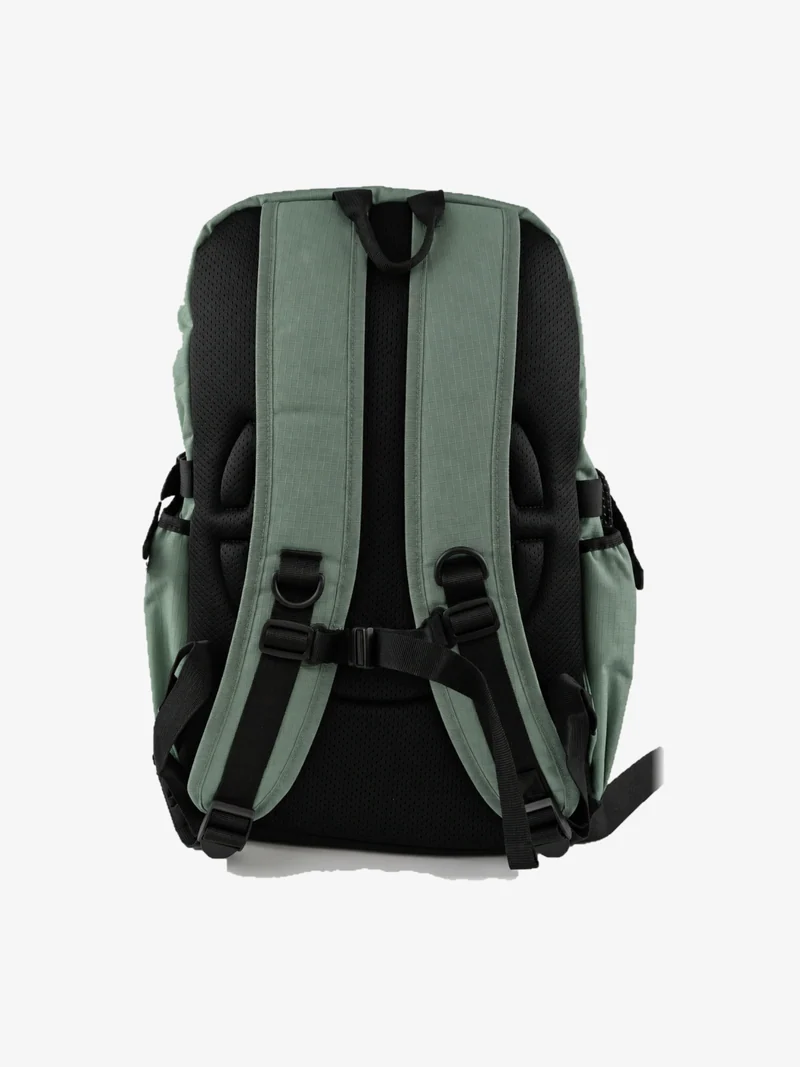
- Laptop backpack
- A daypack built around a padded laptop sleeve, often with an organiser panel, a luggage strap and a padded back panel. Example: backpack with a padded mesh back panel.
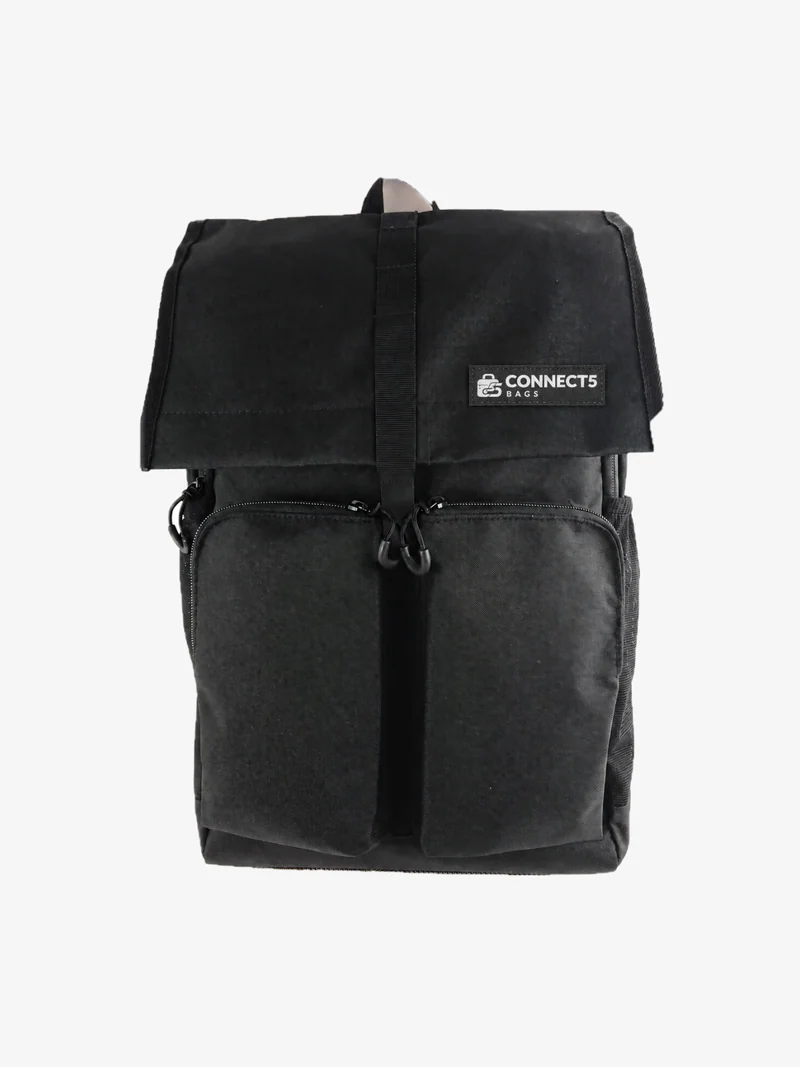
- Roll-top backpack
- The top rolls down and buckles or clips instead of zipping, so the bag expands and sheds rain; popular with commuters and cyclists. Example: roll-top backpack.
- Minimalist or flat-front backpack
- A clean front with a hidden or centre zip, little visible hardware and a rectangular shape. Example: centre-zip backpack.
- Anti-theft backpack
- Zips that open against the back panel or hide under a flap, plus hidden pockets, for travel and city use.
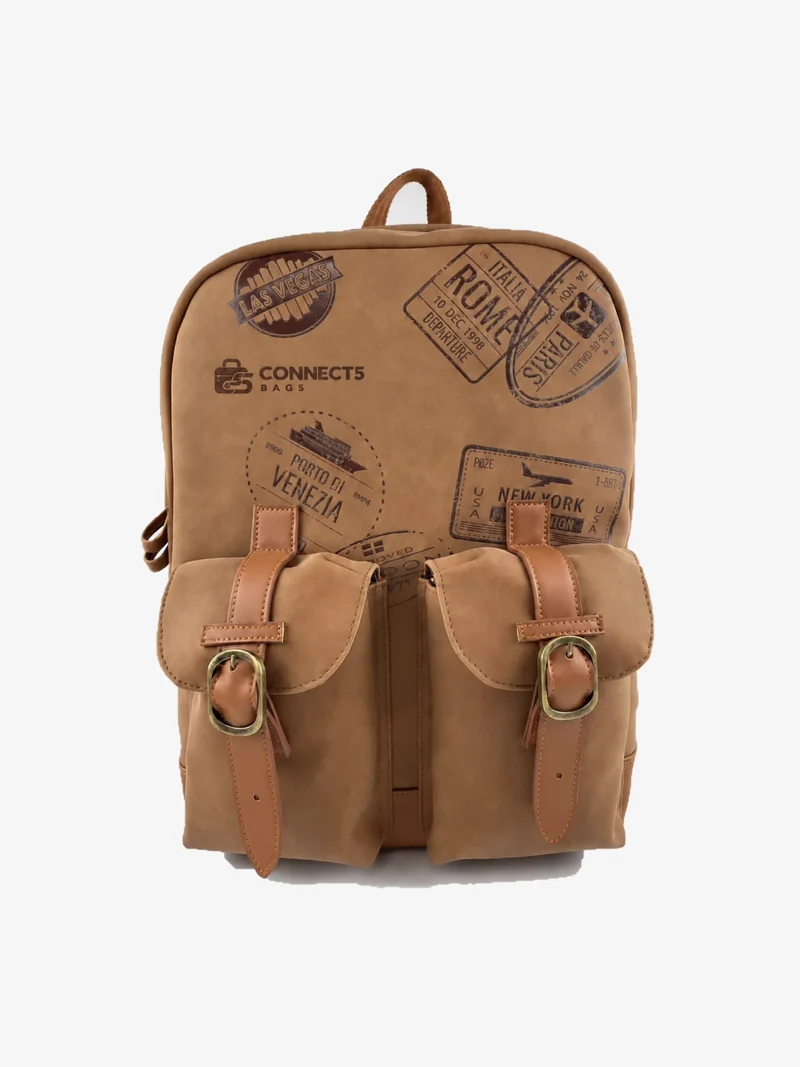
- Leather or PU backpack
- A smart backpack in leather or PU leather, often with a flap and buckles, for work and fashion.
School, kids and character backpacks
- School backpack (bookbag)
- A 15–30 litre backpack sized for books and binders, with padded straps, a chest strap, reflective details and a name tag. See kids and school backpacks.
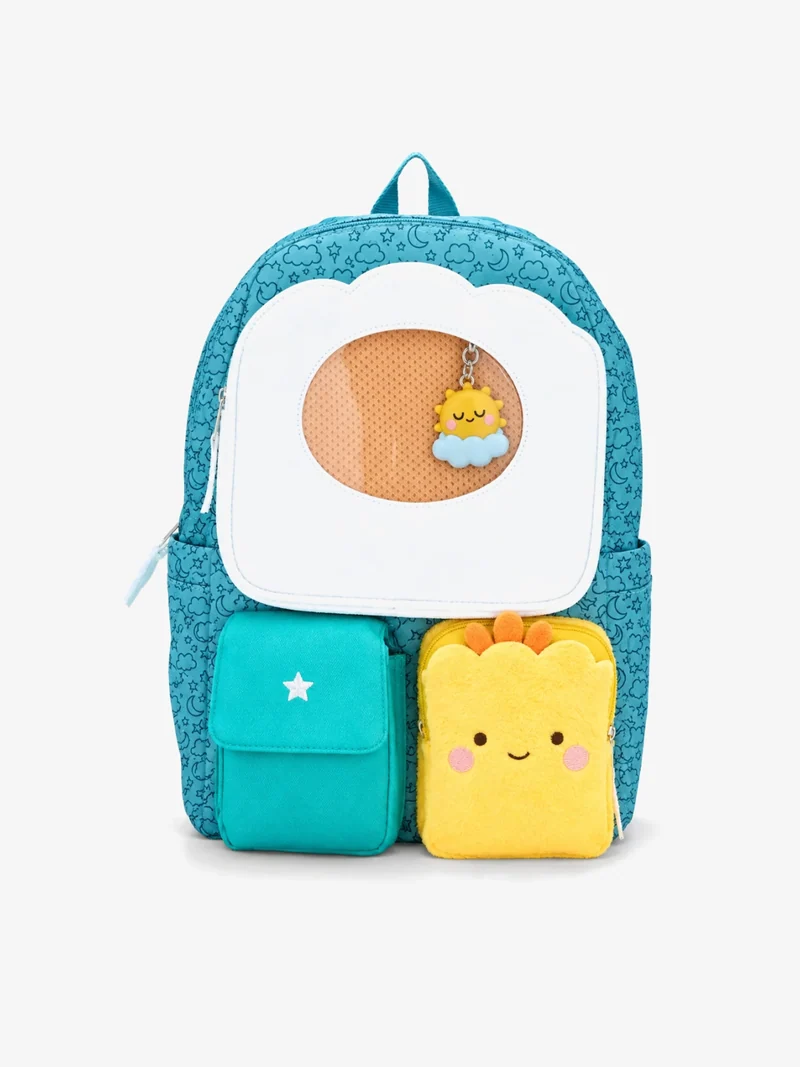
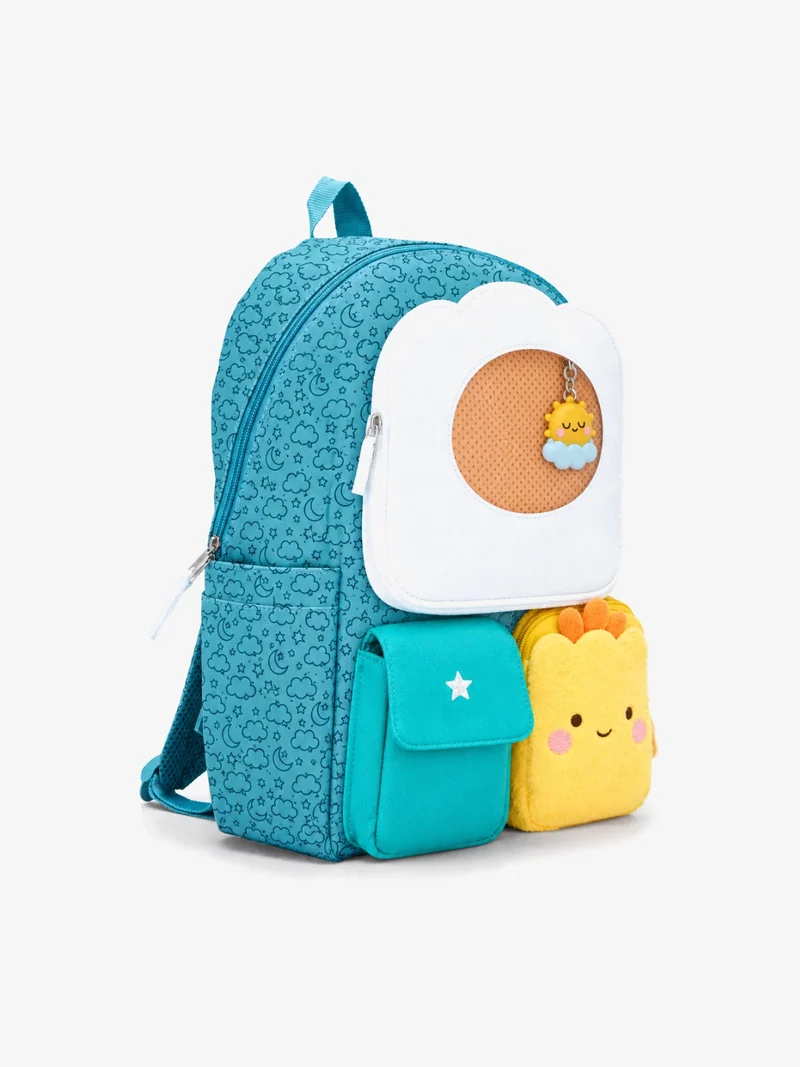
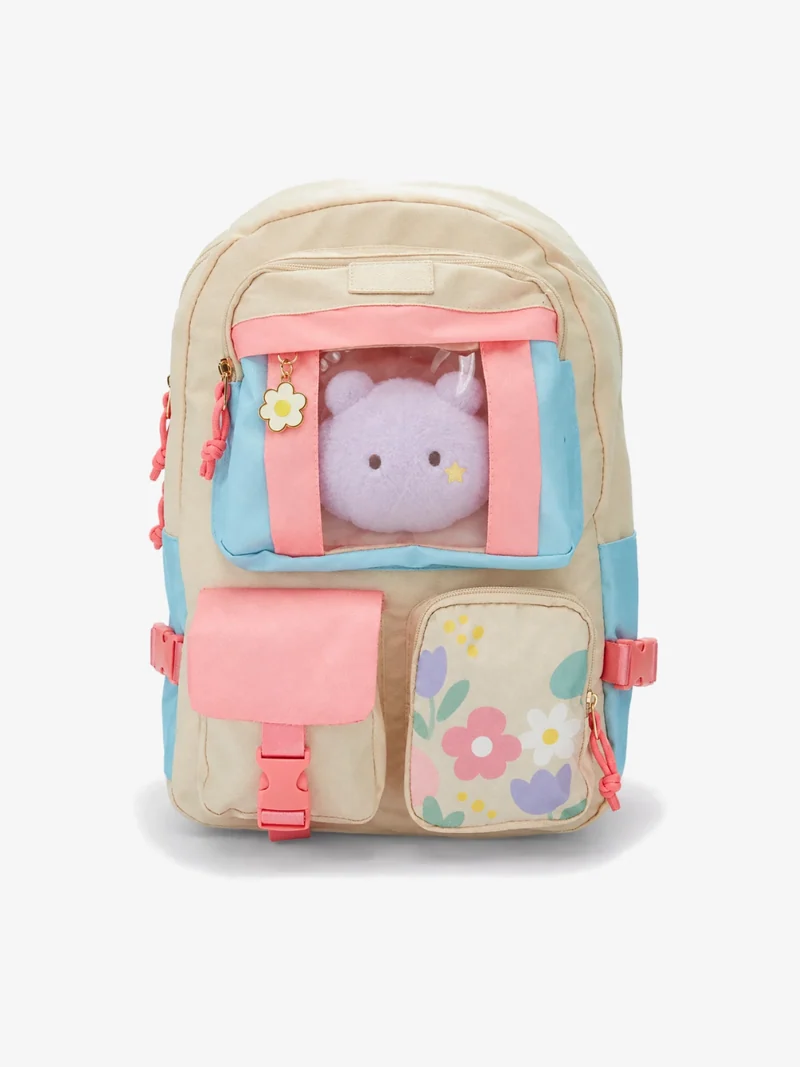
- Character or cartoon backpack
- A kids’ backpack built around a print, appliqué or a character shape; artwork carries the bag, so licensing and print quality matter. Example: cloud-and-star print backpack.
- Rolling backpack
- A school backpack on a trolley handle and wheels, for children who carry heavy loads a long way.
- Camouflage and pattern backpacks
- Any of the styles above in an all-over camo, check or patchwork fabric; the pattern is printed or woven into the main fabric.
Mini, fashion and see-through backpacks
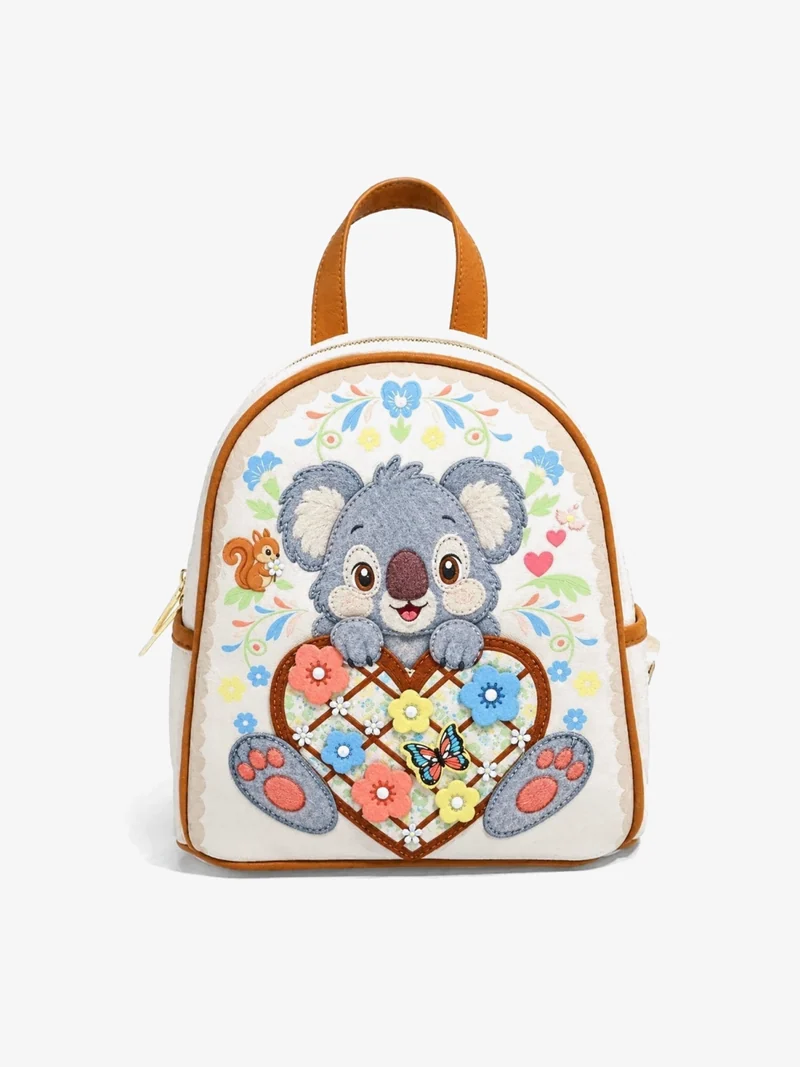
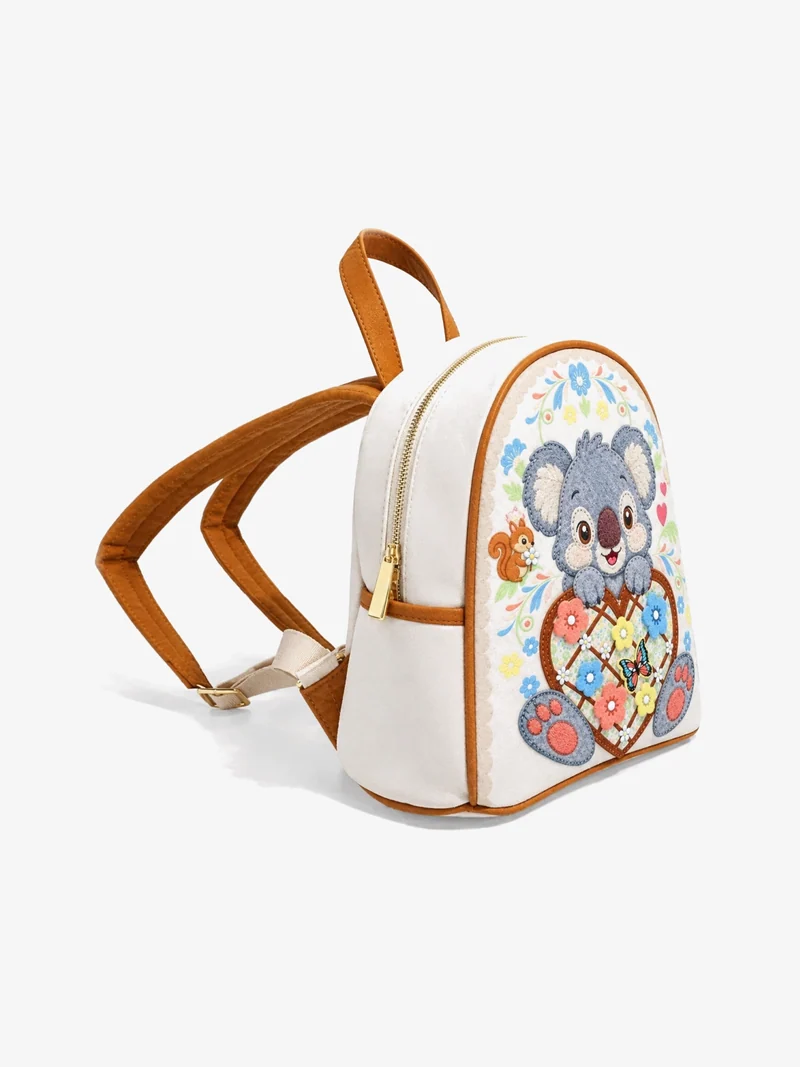
- Mini backpack
- A small backpack of about 20–28 cm tall and 3–7 litres, carried as a handbag alternative; for adults and children alike. Examples: cream mini backpack, denim mini flap backpack.
- Convertible backpack
- A bag whose straps reattach so it can be worn as a backpack, a shoulder bag or a crossbody.
- Mesh backpack
- A backpack made mostly from open mesh so the contents are visible and the bag dries fast; used for beach, swim and sports kit, and accepted by some schools that require see-through bags.
- Clear backpack
- A see-through PVC or TPU backpack for stadiums and schools with clear bag rules. See our guide to clear bags for the size limits.
- Sling backpack
- A single strap worn across the body, with the bag swung round to the front to open; a cross between a backpack and a crossbody.
Sports, outdoor and travel backpacks
- Drawstring backpack
- Two panels closed by cords that double as straps; the lightest and cheapest backpack, used for gym and events. See drawstring bags.
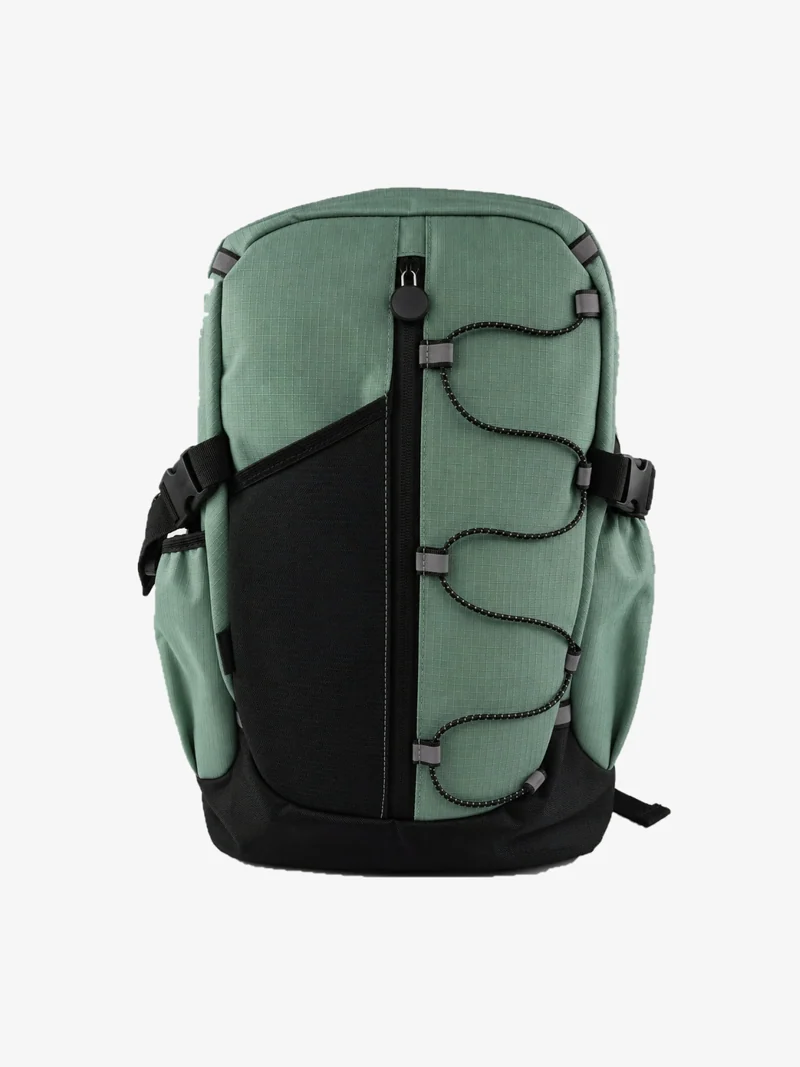
- Hiking rucksack
- A larger pack, usually 30–65 litres, with a framed or ventilated back, a hip belt and load lifters to move weight onto the hips. Example of technical detailing: ripstop backpack.
- Hydration pack
- A slim pack with a sleeve for a water reservoir and a drinking tube, for running and cycling.
- Travel or carry-on backpack
- A 30–45 litre backpack that opens like a suitcase and fits airline cabin limits; see personal item size by airline.
The part names used above, from load lifters to back panels, are explained in our backpack parts diagram.
Sizes and choosing a type for a range
Each type has a typical size band: minis at 3–7 litres, school and everyday bags at 15–30 litres, travel packs at 35–45 litres and hiking packs above that. Exact dimensions by use are in our backpack size chart.
A brand range usually combines two or three types in shared materials and colours, for example a laptop backpack, a roll-top and a sling, or a school backpack with a matching mini and pencil case. Connect5 makes backpacks for brands in our Phnom Penh factory (see About Us); browse the men’s backpack, back-to-school and kids collections, or read how custom backpacks are made.
Questions buyers ask
What are the main types of backpacks?
Everyday daypacks, laptop backpacks, roll-tops, school backpacks, mini backpacks, mesh and clear backpacks, drawstring backpacks, sling bags, hiking rucksacks, hydration packs and travel backpacks.
What is a mini backpack?
A small backpack about 20 to 28 cm tall that holds 3 to 7 litres, carried like a handbag for essentials rather than books or a laptop.
What is a mesh backpack used for?
Carrying wet or sandy kit for the beach, pool and sports, and in schools that require bags whose contents are visible.
What is the difference between a backpack and a rucksack?
In everyday use they mean the same thing. In outdoor gear, a rucksack usually means a larger hiking pack with a hip belt and a supportive back system.
What type of backpack is best for a laptop?
A laptop backpack with a padded, raised sleeve that keeps the laptop off the floor of the bag, and a padded back panel. Check the sleeve fits the device’s actual dimensions.