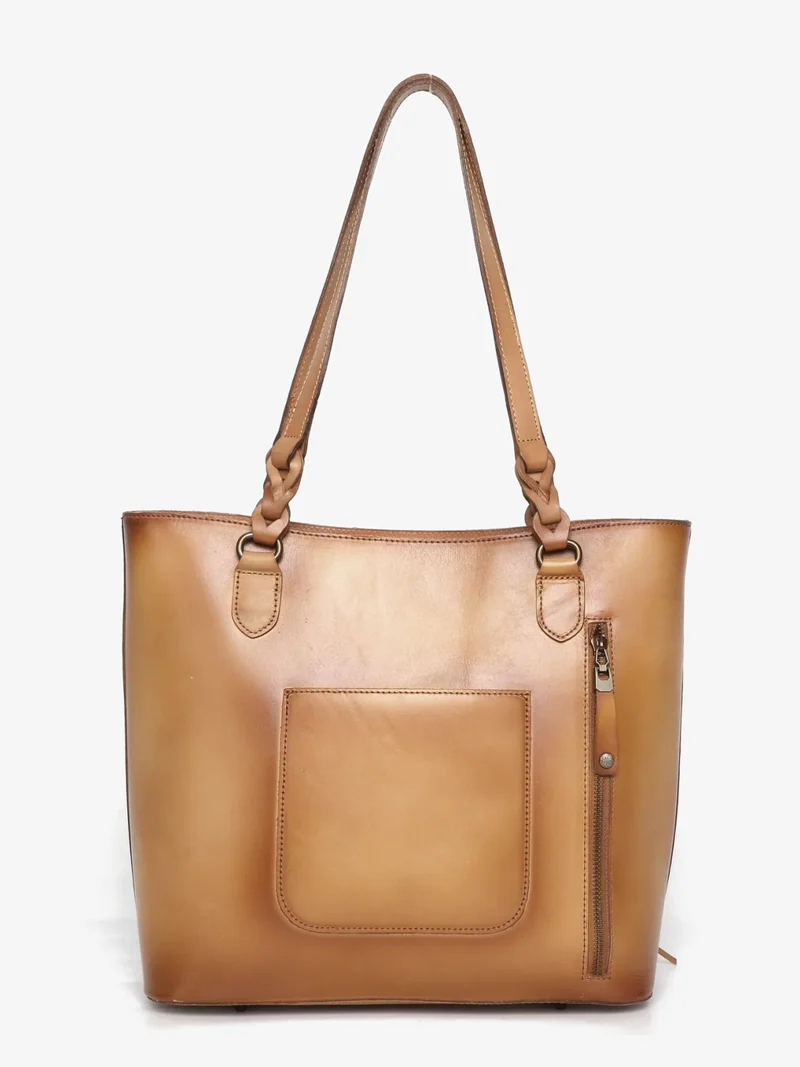
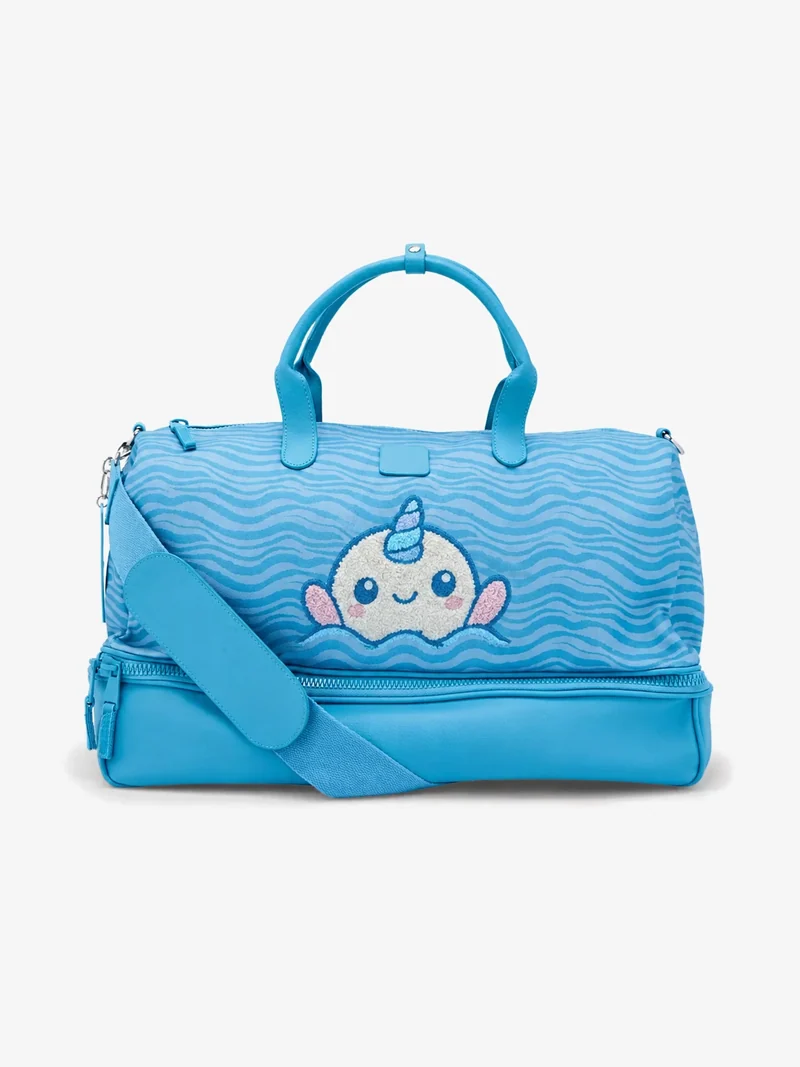
Parts of a handbag
The anatomy of a handbag, the closures and hardware used on it, and the lining materials to choose from, with the names factories use so your specification is clear.
On this page
Handbag anatomy
- 1. Handle
- Rolled, flat or chain handle. Rolled leather handles are wrapped around a cord or foam core.
- 2. Handle drop
- The height from the top of the handle to the top of the bag: about 10–15 cm for hand-carry, 20 cm or more to go over the shoulder.
- 3. Handle tab (anchor)
- The tab that fixes the handle to the body, stitched, riveted or screwed.
- 4. D-ring
- Metal ring for attaching a strap or charm; O-rings and square rings are variants.
- 5. Detachable strap and swivel clasp
- Shoulder or crossbody strap clipped on with swivel clasps (snap hooks). Strap drop is measured like handle drop.
- 6. Flap
- Fold-over cover on the front; may be full or half length.
- 7. Turn lock
- Twist-closure hardware on the flap. See the closures table below.
- 8. Front panel
- The main visible panel, with the logo or front pocket.
- 9. Gusset
- The side and bottom panels that give the bag its depth.
- 10. Piping
- Cord-filled trim sewn into seams to define edges and keep the shape.
- 11. Base
- The bottom panel, usually with a stiffener board.
- 12. Bag feet
- Metal studs on the base that protect it when the bag is set down.
Inside, most handbags have a lining, a slip pocket, a zip pocket, and sometimes a key clip or card slots. Edges on leather bags are either folded (turned) or cut and sealed with edge paint.
Handbag closures compared
| Closure | Security | Look and use |
|---|---|---|
| Zip (top zip, zip-around) | High | The most secure; coil zips for fabric bags, metal zips for a heavier, premium look. |
| Magnetic snap | Medium | Hidden or visible, quick to open; common on totes, flaps and wallets. |
| Turn lock or twist lock | Medium | Decorative metal hardware on flap bags; a brand signature on many satchels. |
| Press stud (snap button) | Medium | Small and cheap; wallets, tabs, cardholders. |
| Push lock or tuck lock | Medium | Flap tongue pushed into a lock plate; structured bags. |
| Drawstring | Low | Bucket bags and pouches; often paired with a magnet. |
| Buckle and strap | Low to medium | Satchels and messenger bags; often decorative over a hidden magnet. |
| Kiss lock (frame) | Medium | Metal frame with two clasping balls; coin purses and evening bags. |
| Open top | None | Totes and shoppers; add an inner zip pocket for valuables. |
Hardware names
- Rings: D-ring, O-ring, square ring, used to attach straps.
- Clasps: swivel clasp (snap hook), lobster clasp, spring gate ring.
- Fixings: rivets, Chicago screws, eyelets and grommets.
- Adjusters: slide buckle and tri-glide for strap length; pin buckles for belts and strap ends.
- Decoration and protection: logo plates, bag feet, chain straps, zip pullers.
Most bag hardware is zinc alloy or brass with a plated finish (gold, silver, gunmetal, antique brass). Specify the finish, the size by inner width (for example a 25 mm D-ring for a 25 mm strap) and any engraving.
Handbag lining materials
| Lining | Character | Typical use |
|---|---|---|
| Polyester twill or taffeta (150D–210D) | Light, durable, easy to print with a brand pattern | Most fashion handbags and backpacks |
| Cotton or cotton canvas | Natural feel, can be printed; marks more easily | Canvas totes, heritage bags |
| Microfibre or suede-like fabric | Soft, premium feel | Leather handbags, wallets, cases for delicate items |
| Leather or leather split | Most premium, heavy | Luxury bags, small leather goods |
| Coated or PVC lining | Wipe-clean, water resistant | Cosmetic bags, kids bags, lunch and bottle bags |
A light lining colour makes the contents easier to see; a printed lining is one of the cheapest ways to make a private label bag feel branded.
Specifying parts for production
When you brief a factory, name each part, its material and finish, and its size. Our tech pack template has a bill of materials table for exactly this. Browse the leather bag and fashion bag collections for styles to start from, and the types of handbags guide for style names.
Questions buyers ask
What are the parts of a handbag called?
The main parts are the handles and their tabs, the strap with D-rings and swivel clasps, the front and back panels, the gusset, the base and feet, the closure (zip, flap, magnet or turn lock), the lining and the inner pockets.
What is handle drop on a handbag?
The distance from the top of the handle to the top of the bag when the handle is held upright. Around 10–15 cm suits hand-carry; 20 cm or more lets the bag go over the shoulder.
What is the gusset of a bag?
The side and bottom panels between the front and back that give the bag its depth.
What is the most secure closure for a handbag?
A zip. Magnetic snaps, turn locks and push locks are quicker to open but less secure; open totes have no closure.